What Mixes Well With Espresso? 9 Drinks That Actually Work
What mixes well with espresso? A 35 g shot can take 100 g of water, 40 g of milk, or 120 g of tonic and become three very different drinks.
The mixer changes more than sweetness: it changes dilution, temperature, texture, aroma, and which rough edges stay visible. The right mixer does not rescue a badly extracted shot; it decides which part of the shot you notice. The nine builds below use weighed starting ranges, so you can change one variable instead of guessing from the size of a glass.

The 30–40 g espresso base: set a neutral starting point before you add anything
Before comparing mixers, make the espresso reasonably repeatable. For a home espresso machine, begin with 18–20 g of ground coffee and aim for 30–40 g of espresso in 25–35 seconds from pump start. That gives you a workable concentrate without pretending one recipe suits every bean, basket, or machine.
This is roughly a 1:1.5 to 1:2.2 espresso brew ratio. A brew ratio is the mass of the drink compared with the dry coffee dose, so 18 g in and 36 g out is 1:2. The range can move: a light roast, a deep basket, a different grinder, or a machine that flows quickly may need another yield or brew time to taste balanced.
Set the cup on a scale, tare it, and stop the shot at a visible target such as 36 g. Then weigh the mixer into the same cup or a separate glass. That habit matters because a large tumbler can hide a 40 or 50 g difference in dilution.
- Pull the espresso and taste a small sip before adding anything.
- If it is sharply sour and hollow, treat that as likely under-extraction: too little coffee material has dissolved into the water. If it is dry, harsh, or burnt, check for over-extraction and dark roast character before blaming the mixer.
- Once the shot is at least serviceable, compare drinks using the same espresso yield.
For water-based builds, the coffee to water ratio calculator can handle the arithmetic when you want to scale the recipe. Keep the espresso fixed and change the mixer first; otherwise you will not know which adjustment changed the cup.
Three low-risk dilutions: Americano, iced Americano, and espresso tonic
These are the easiest first comparisons because the espresso remains recognizable. Water adds dilution, ice changes temperature and melt, while tonic adds sweetness, bitterness, and carbonation as well.
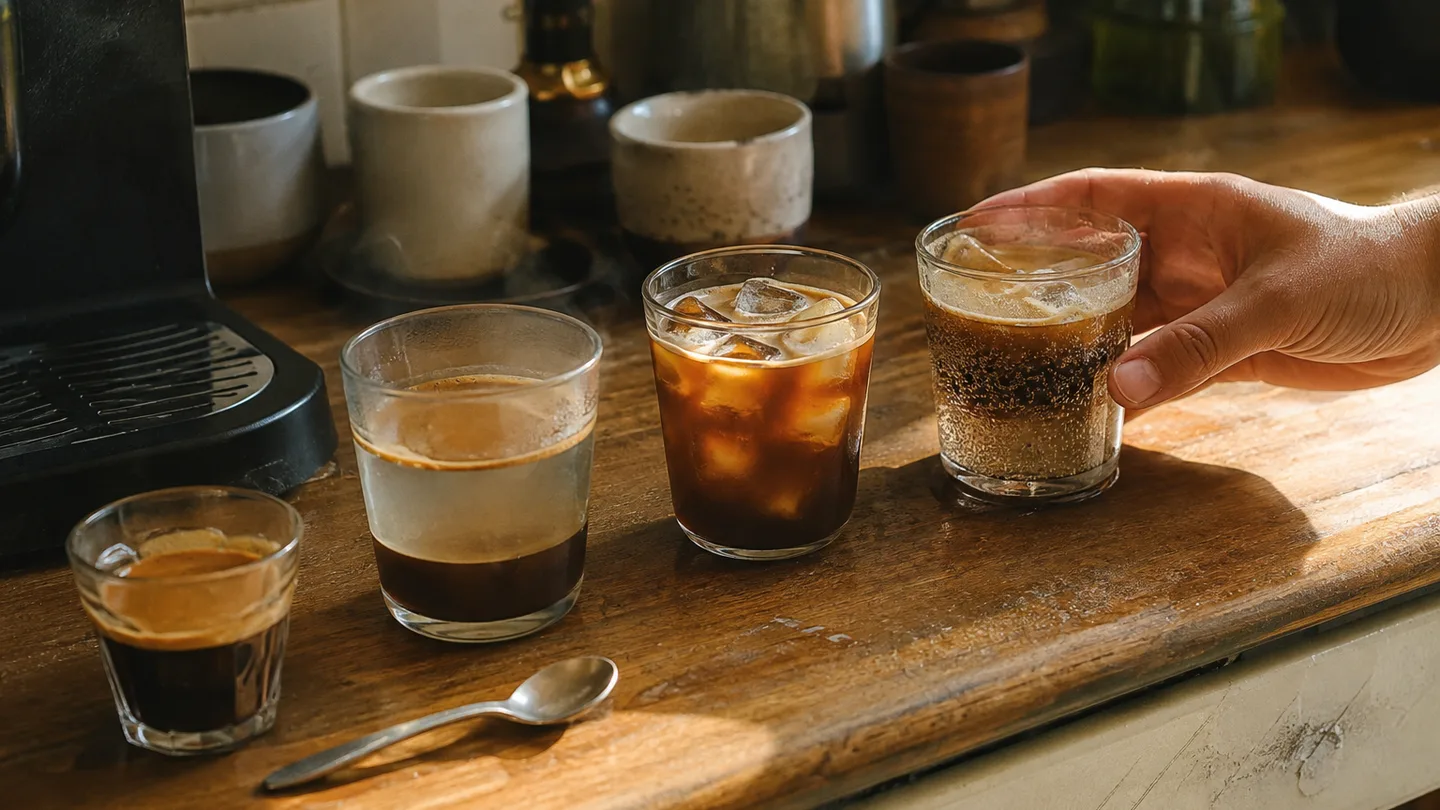
1. Americano: the cleanest coffee-forward option
Start with 30–40 g of espresso and 90–150 g of hot water. Around 120 g is a useful middle point: use the lower end for a dense, coffee-forward cup and the upper end when the shot tastes intense or bitter. Add the water to the cup, then the espresso, or reverse the order if you prefer more crema on top; the final mass is the important control.
An Americano preserves more of the espresso’s own clarity than the flavoured builds because its second ingredient contributes almost no taste beyond water. It is the best diagnostic drink in this group: if the shot tastes unpleasant with water, milk or syrup may cover the problem without solving it.
2. Iced Americano: colder, quieter, more refreshing
Use 30–40 g of espresso, 100–150 g of cold water, and enough ice to keep the drink cold through the first few minutes. Start at 120 g cold water. Cold temperature makes aroma feel quieter and gives the drink a crisper impression, while melting ice gradually adds more dilution than the scale reading alone suggests.
This build suits espresso with clear sweetness and moderate bitterness. If a dark, roasty shot already tastes heavy, the cold water may make it refreshing, but it will not remove the roast flavour; it simply makes the first impression less aromatic.
3. Espresso tonic: bitter, sparkling contrast
Fill a glass with ice, add 100–150 g of chilled tonic, and pour 30–40 g of espresso over it. Start at 120 g tonic. Pouring the tonic over ice first and adding espresso last gives the dissolved gas room to escape instead of making the shot hit a warm, turbulent pool and foam over the rim.
Tonic changes the drink in several directions at once. Its bubbles lift aroma, its bitter edge can reinforce a dark roast, and its sweetness can make a bright espresso seem fruitier. For clarity choose an Americano; for refreshment choose the iced version; choose tonic when you want deliberate contrast rather than a quiet coffee flavour.
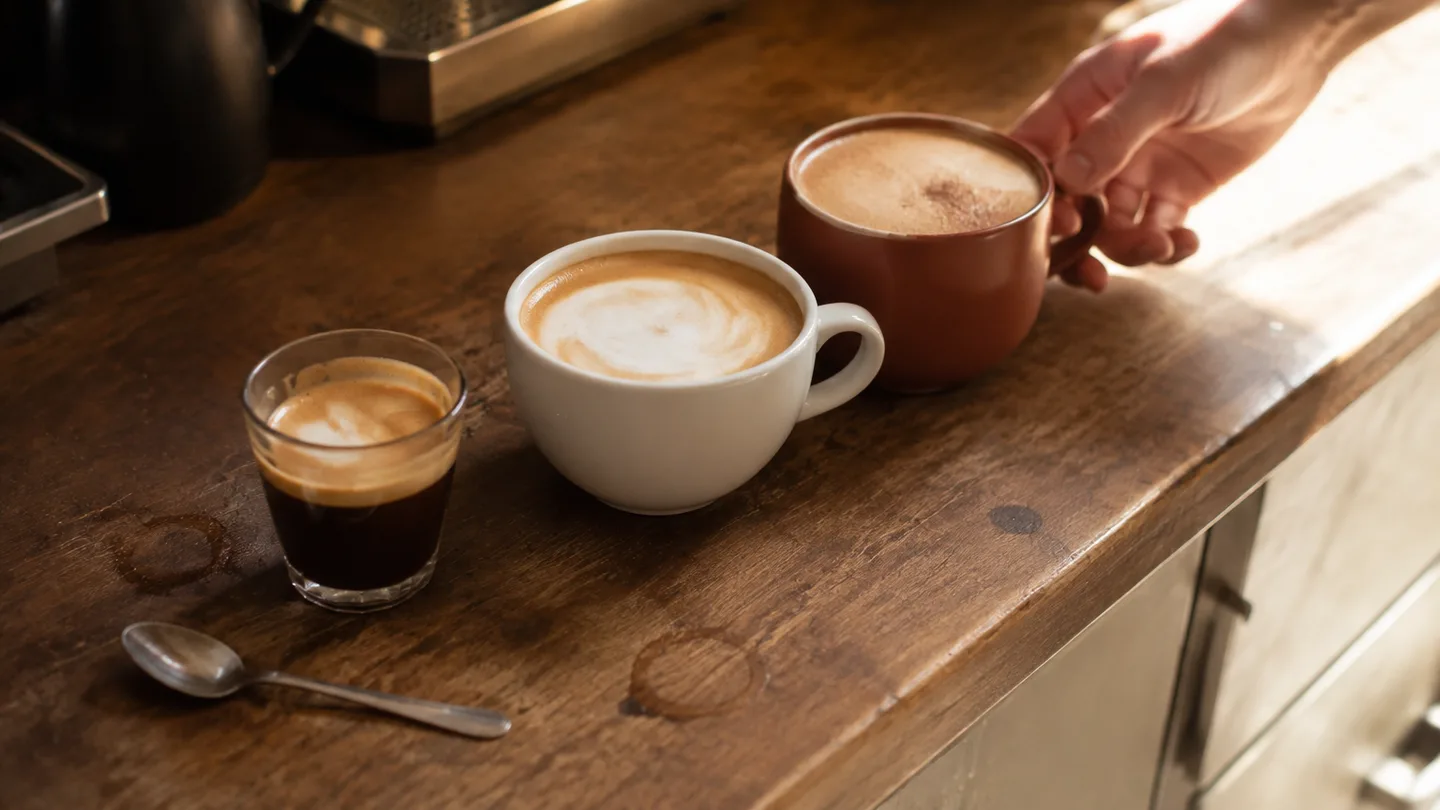
Milk and cocoa at controllable ratios: cortado, latte, and mocha
Milk drinks become predictable once you separate milk mass from foam. Microfoam means steamed milk with very small bubbles integrated through the liquid, not a stiff layer of airy froth sitting on top.
4. Cortado: near-equal parts with real coffee presence
Combine 30–40 g of espresso with 30–50 g of steamed milk. Start around 40 g milk and keep the texture glossy, with only a thin cap of fine foam. The near 1:1 build adds body and milk sweetness without diluting the espresso into the background, so it is a strong choice when you want the coffee to remain the main flavour.
5. Latte: the softest of the three
Use 30–40 g of espresso with 150–220 g of steamed milk and a small amount of integrated microfoam. The larger milk mass lowers coffee concentration and makes bitterness feel rounder, while the milk’s sweetness becomes part of the drink’s flavour. If you add a thick scoop of foam instead of liquid milk, the cup can feel light and airy without actually becoming less concentrated underneath.
6. Mocha: chocolate as a controlled cover
For a mocha, use 20–30 g of chocolate sauce or 10–20 g of cocoa with 30–40 g of espresso and 120–180 g of milk. Stir cocoa or sauce into the hot espresso before adding the milk; this disperses the chocolate more evenly and avoids dry pockets. Start at the lower chocolate range if the bean has useful fruit or caramel notes, and move higher when the goal is a dessert-like drink.
The practical difference between these drinks is milk mass, sweetness, and foam texture, not a secret recipe. Specialty Coffee Association guidance on espresso beverage ratios and milk texture can help with menu terminology, but your kitchen scale gives you the more useful answer: weigh the milk and judge the foam.
Three bold pairings that need more than a splash: orange juice, condensed milk, and cola
These combinations work because the non-coffee ingredient has enough flavour to meet espresso halfway. They are not neutral dilutions, so bean character and extraction quality matter more.
7. Espresso orange: bright, sharp, and best over ice
Add 100–150 g of cold orange juice to ice, then pour 30–40 g of espresso over it. Around 120 g juice is a sensible starting point. Citrus acidity can sharpen the perceived brightness of a fruity espresso, while orange sweetness can round caramel notes; with a sour, under-extracted shot, the two acids may simply make the drink taste sourer.
Use a light-to-medium roast with clear sweetness or a medium roast that is more caramel-led. A heavily smoky espresso can dominate the juice, leaving the drink tasting like bitter roast and orange rather than coffee with fruit.
8. Espresso with condensed milk: dense and dessert-like
Stir 25–35 g of condensed milk into 30–40 g of espresso, then pour the mixture over 80–120 g of ice. The concentrated sugar and milk solids supply sweetness, viscosity, and a coating texture, so this drink needs less condensed milk than ordinary milk because the ingredient is already concentrated.
Vietnamese coffee culture and the traditional phin preparation of cà phê sữa đá deserve their own context. Traditional cà phê sữa đá uses phin-brewed coffee with condensed milk; an espresso version is a convenient adaptation that changes the extraction method, not a replacement for the canonical preparation. That distinction matters when comparing it with vietnamese iced coffee.
9. Espresso cola: caramel fizz with a bitter edge
Pour 120–180 g of chilled cola over ice and add 30–40 g of espresso last. Start at 150 g cola. Carbonation brings lift, cola brings caramel sweetness and bitterness, and espresso adds roast, fruit, or cocoa depending on the bean.
Very dark, smoky espresso is not the best starting point here because its roast bitterness can stack with cola’s bitter edge. A lighter or medium roast with caramel, nut, or fruit notes usually gives the cola enough coffee character without turning the finish ashy.
Choose by the result you want: a sensory matrix for sweetness, clarity, body, and brightness
The nine drinks are easier to choose when you start with the result rather than the name. If menu language is the confusing part, espresso drinks explained is the useful companion; the matrix below is about what changes in the cup.
| Drink | Choose it for | It emphasizes | First lever |
|---|---|---|---|
| Americano | Clear coffee flavour | Roast aroma and finish | 90–150 g water |
| Iced Americano | Cold refreshment | Crispness, quieter aroma | 100–150 g cold water |
| Espresso tonic | Sparkling contrast | Bitter edge and lift | 100–150 g tonic |
| Cortado | Balance and body | Espresso with milk sweetness | 30–50 g milk |
| Latte | A soft creamy cup | Milk sweetness | 150–220 g milk |
| Mocha | Chocolate sweetness | Cocoa and body | 20–30 g sauce |
| Espresso orange | Fruit brightness | Citrus acidity | 100–150 g juice |
| Condensed milk | Dessert-like sweetness | Sugar and milk solids | 25–35 g condensed milk |
| Espresso cola | Caramel fizz | Carbonation and bitterness | 120–180 g cola |
One-change troubleshooting
| Flaw | Likely mechanism | Change first |
|---|---|---|
| Thin or watery | Too much mixer for the shot | Reduce mixer by 10–20 g |
| Harsh or bitter | Espresso intensity dominates | Add 10–20 g water or milk |
| Orange tastes sour | Acidity from juice and espresso stacks | Use sweeter juice |
| Tonic tastes medicinal | Tonic bitterness meets smoky roast | Reduce tonic toward 100 g |
| Mocha tastes flat | Chocolate covers coffee detail | Reduce sauce or cocoa |
The cortado is the most versatile choice here. Its near-equal espresso-to-milk ratio adds body without hiding the coffee, which makes it a better all-purpose starting point than a latte or a highly flavoured mixer. Choose an iced Americano for clean refreshment, mocha or condensed milk for sweetness, and tonic or orange when contrast is the point.
A nine-drink tasting order that changes one variable at a time
Do not make all nine drinks at once and rely on memory. Pull three or four shots from the same coffee using the same dose and yield, then use each shot for a different level of intervention.
- Shot one: taste the espresso plain and write down one note for sweetness, bitterness, acidity, body, and finish.
- Shot two: make an Americano with 120 g hot water. This shows what dilution alone changes.
- Shot three: make a cortado with 40 g steamed milk. This shows what milk sweetness and texture add without a large dilution jump.
- Shot four: choose one bold mixer: 120 g tonic, 120 g orange juice, 150 g cola, or 30 g condensed milk over ice.
On a second pass, swap the fourth drink for another bold category. Keep the espresso near 30–40 g, weigh every mixer, and taste the drinks at similar temperatures. You are looking for the point where the mixer supports the shot instead of replacing it.
That gives you a practical answer to what mixes well with espresso. Start with a cortado for balance, an Americano for clarity, a latte or mocha for softness, condensed milk for dense sweetness, and orange or tonic when you want the coffee to argue with the mixer in an interesting way.
Three practical questions before you mix
Can you use sparkling water instead of tonic with espresso?
Yes. Use roughly 90–120 g of chilled sparkling water with 30–40 g of espresso for a dry, unsweetened espresso soda. Add syrup only if the result needs sweetness; sparkling water gives lift without tonic’s bitter flavour.
Should espresso go into the mixer or should the mixer go into espresso?
For water and milk, either order works, although adding espresso to prepared milk can preserve the foam texture. For tonic, cola, and other carbonated mixers, pour the mixer over ice first and add espresso last to control foam and overflow.
Which espresso roast works best with orange juice or tonic?
Light-to-medium roasts with clear sweetness and moderate acidity usually keep more of their character in bright mixers. Very dark roasts can add smoky bitterness that overwhelms orange juice or makes tonic taste medicinal.
Frequently Asked Questions
Can you use sparkling water instead of tonic with espresso?
Yes. Use roughly 90–120 g chilled sparkling water with 30–40 g espresso for a dry, unsweetened version of an espresso soda; add syrup only if the result needs sweetness.
Should espresso go into the mixer or should the mixer go into espresso?
For water and milk, either order works, although adding espresso to the prepared milk helps preserve texture. For tonic, cola, and other carbonated mixers, pour the mixer over ice first and add espresso last to control foam and overflow.
Which espresso roast works best with orange juice or tonic?
Light-to-medium roasts with clear sweetness and moderate acidity usually keep their character in bright mixers. Very dark roasts can add smoky bitterness that overwhelms orange juice or makes tonic taste medicinal.