Nanzhou Coffee
A mechanism-first home coffee brewing site that explains why a cup tastes the way it does — extraction, brew ratio, grind size, water chemistry, and temperature — instead of reviewing gear.
Browse by topic
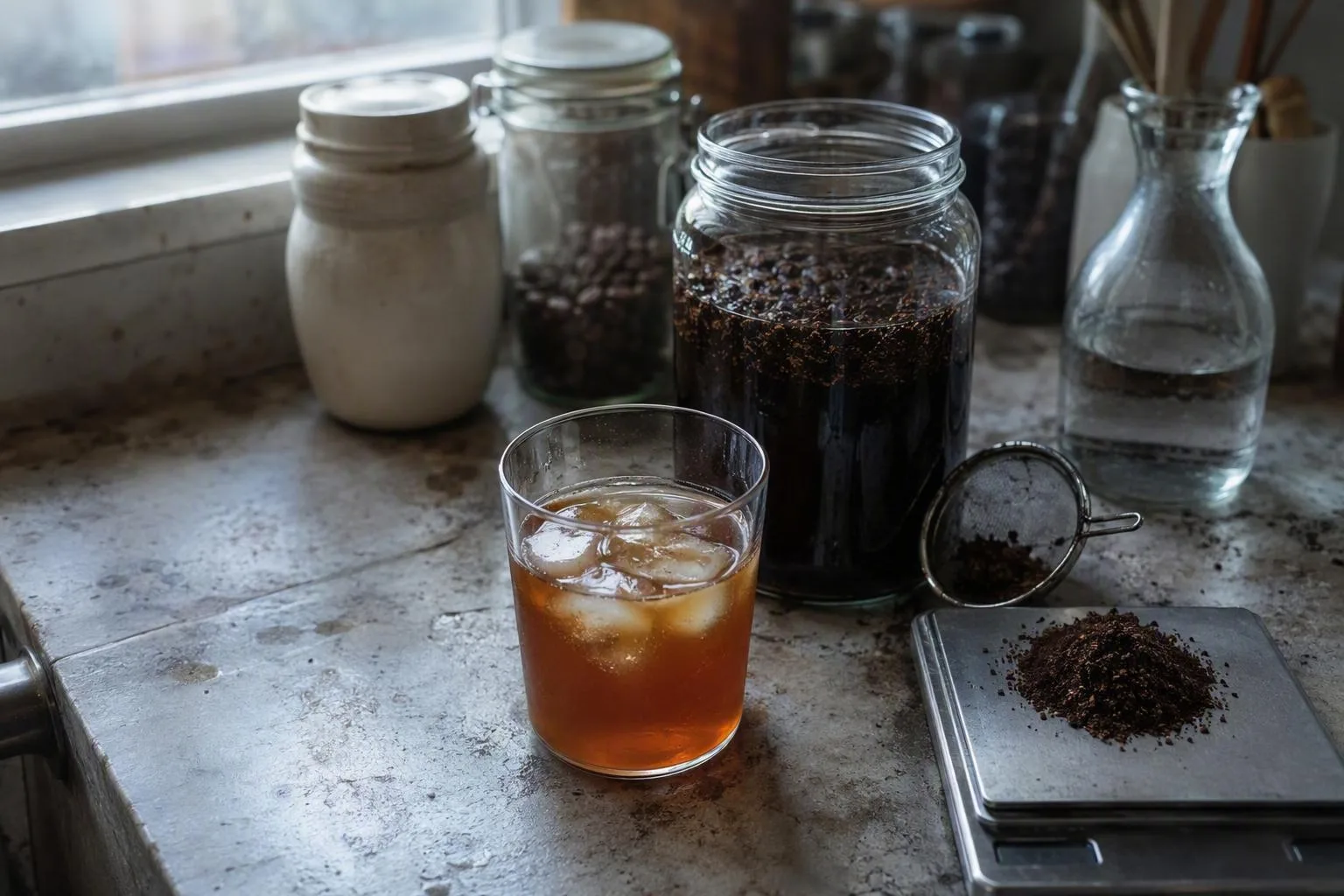 Manual Brew Methods & Ratios
 Espresso & Milk Drinks Decoded
 Global Coffee Traditions
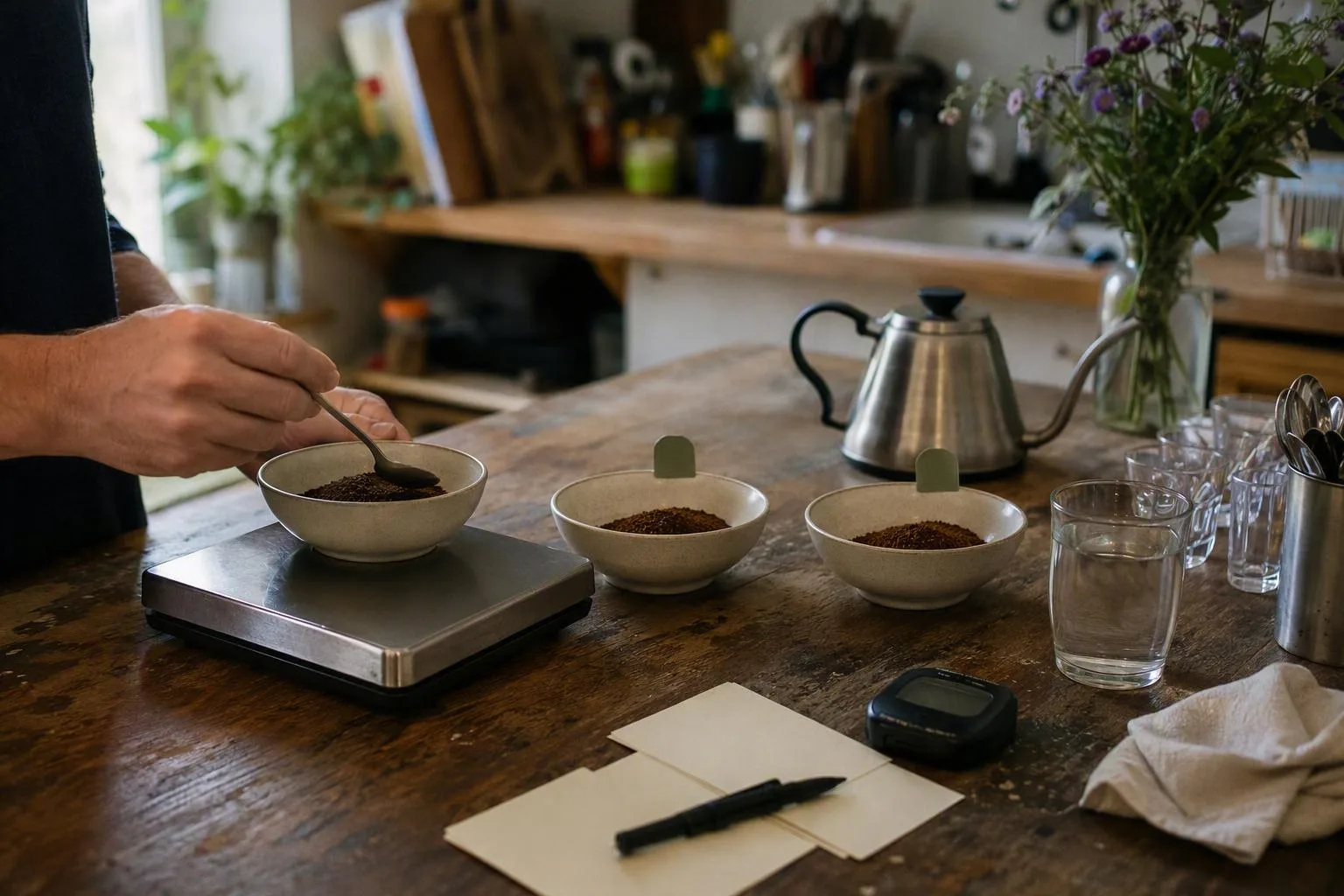 Beans, Roasting & Tasting
 Brewing Fundamentals
Manual Brew Methods & RatiosView all →
- Methods & Ratios
Cold Brew Coffee Ratio: 1:8 or 1:5 for Your Batch?
Choose 1:8 for ready-to-drink cold brew and 1:5 for concentrate. Use mass, dilution math, and a split-batch test to find your ratio with less guesswork.
 Methods & Ratios
Cold Brew Coffee Grounds: How Coarse Should You Grind?
Learn how coarse cold brew coffee grounds should be, why particle spread matters, and how to fix sour, bitter, or muddy batches one variable at a time.
 Methods & Ratios
Cold Brew Coffee How to Make: A Simple 12-Hour Recipe
Learn how to make cold brew coffee in 12 hours with a 1:8 ratio, coarse grind, simple jar method, clean filtration, storage and dilution math.
Espresso & Milk Drinks DecodedView all →
 Espresso Drinks
Espresso Drinks Explained: Ratios, Milk, and Foam at Home
Espresso drinks explained by mass: dial in an 18 g shot, weigh milk and foam, then fix sour, bitter, watery, or coarse cups with one clear adjustment.
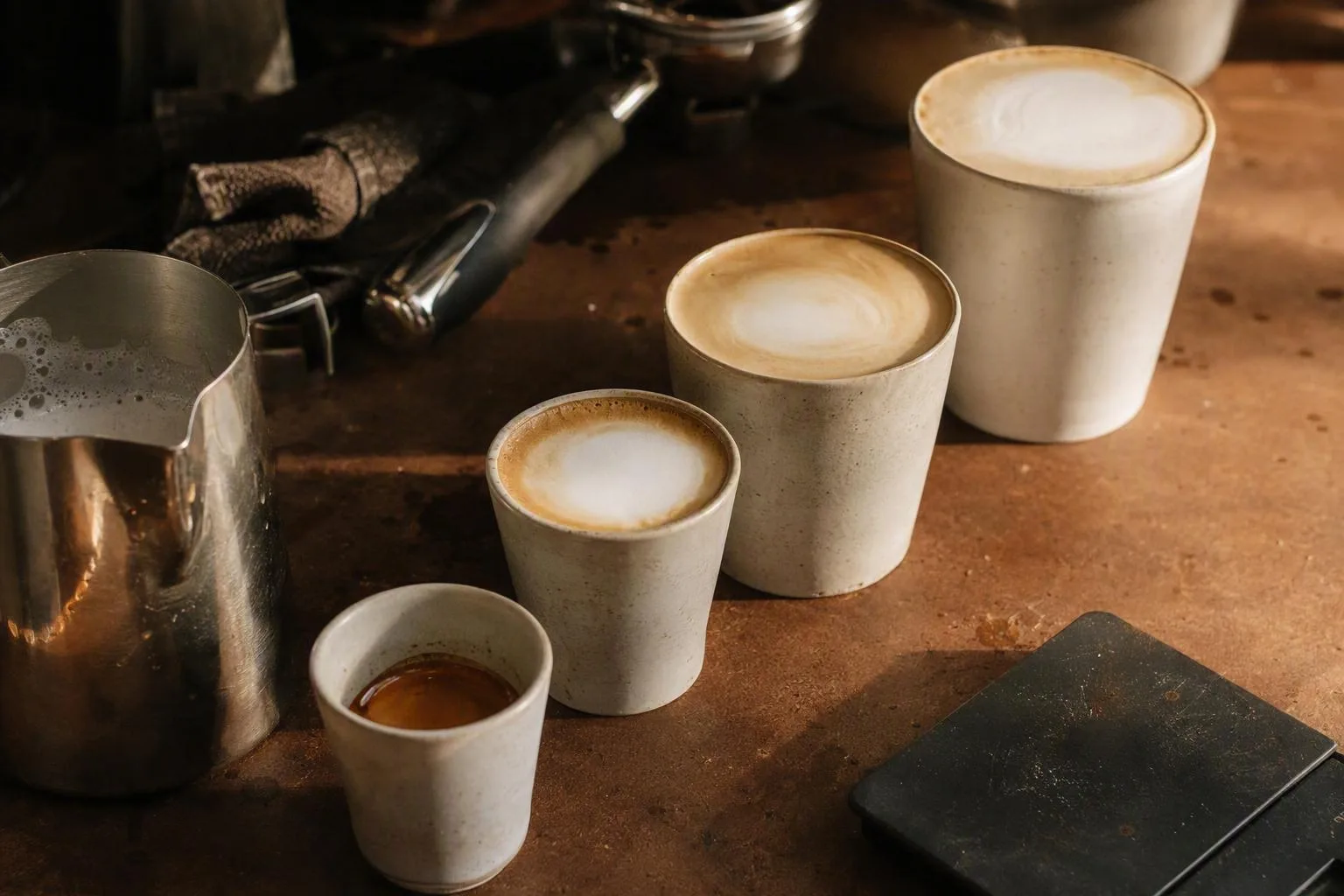 Espresso Drinks
Espresso Drinks Explained: 12 Café Classics by Ratio
Espresso drinks explained by ratio: compare 12 café classics with gram-based recipes for shot yield, milk mass, foam, and water dilution at home.
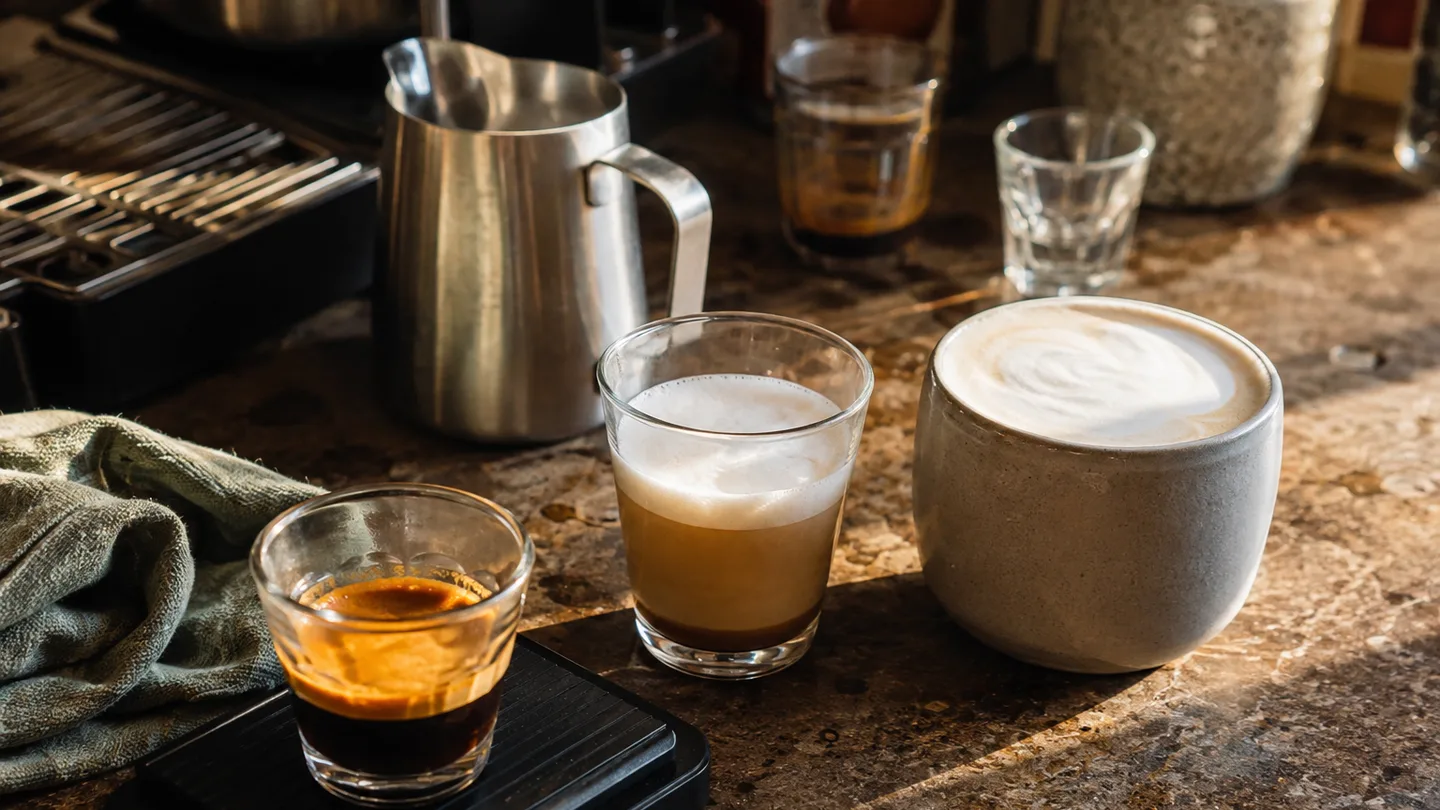 Espresso Drinks
Espresso Drinks to Make at Home: Ratios for Milk, Foam, and Shots
Make espresso drinks to make at home with clear shot, milk, and foam ratios, scaling math, and fixes for sour shots, watery lattes, and flat foam.
Global Coffee TraditionsView all →
- Coffee Traditions
Do You Add Milk to Turkish Coffee? Usually, No—Here's Why
Do you add milk to Turkish coffee? Usually not. Learn what milk changes, three ways to use it, and a reliable 5–7 g water-based cezve recipe for home brewing.
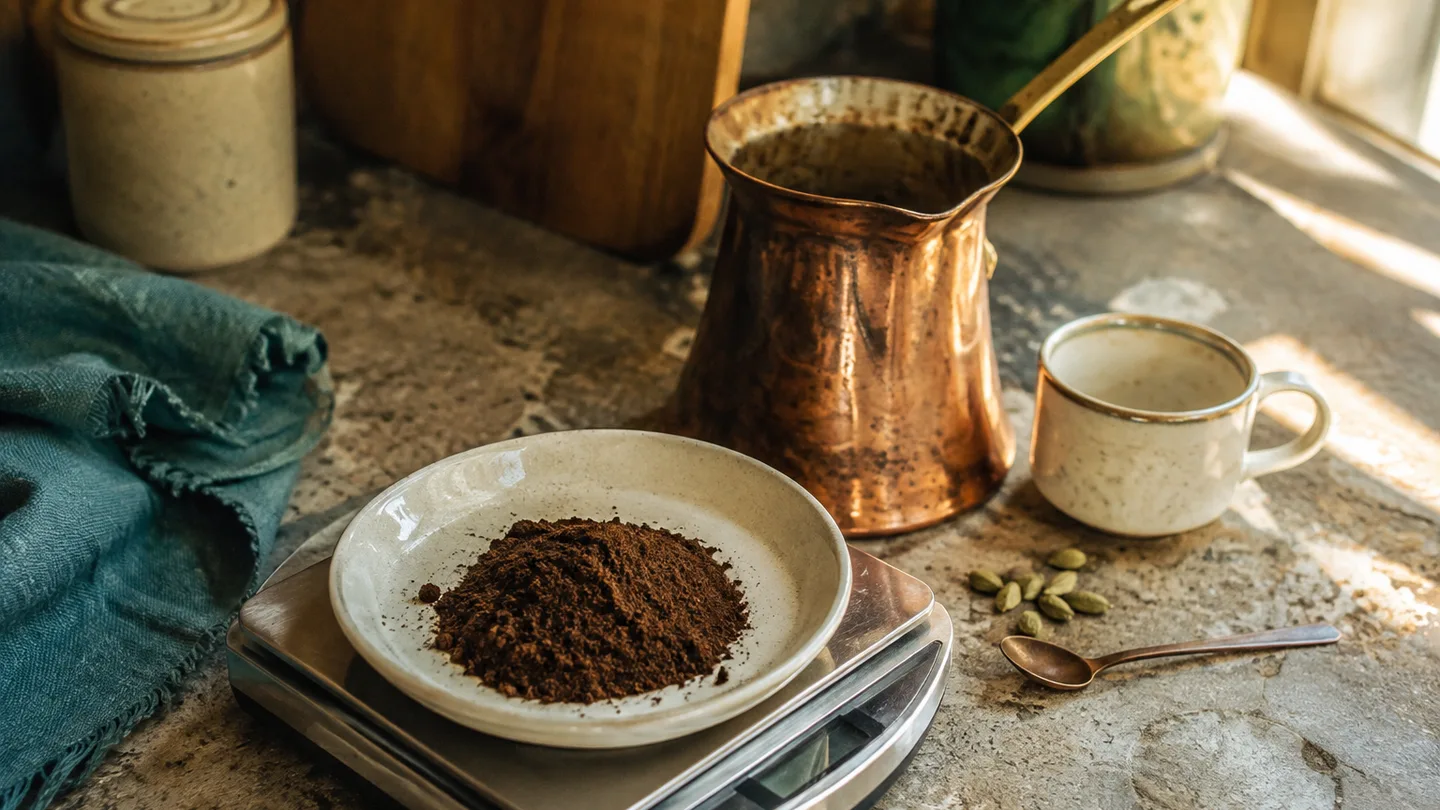 Coffee Traditions
Turkish Coffee: The Fine Grind, Ratio, and Heat Explained
Learn why Turkish coffee needs a powder-fine grind, a 1:8–1:10 ratio, and gentle heat, with a repeatable cezve recipe and troubleshooting guide.
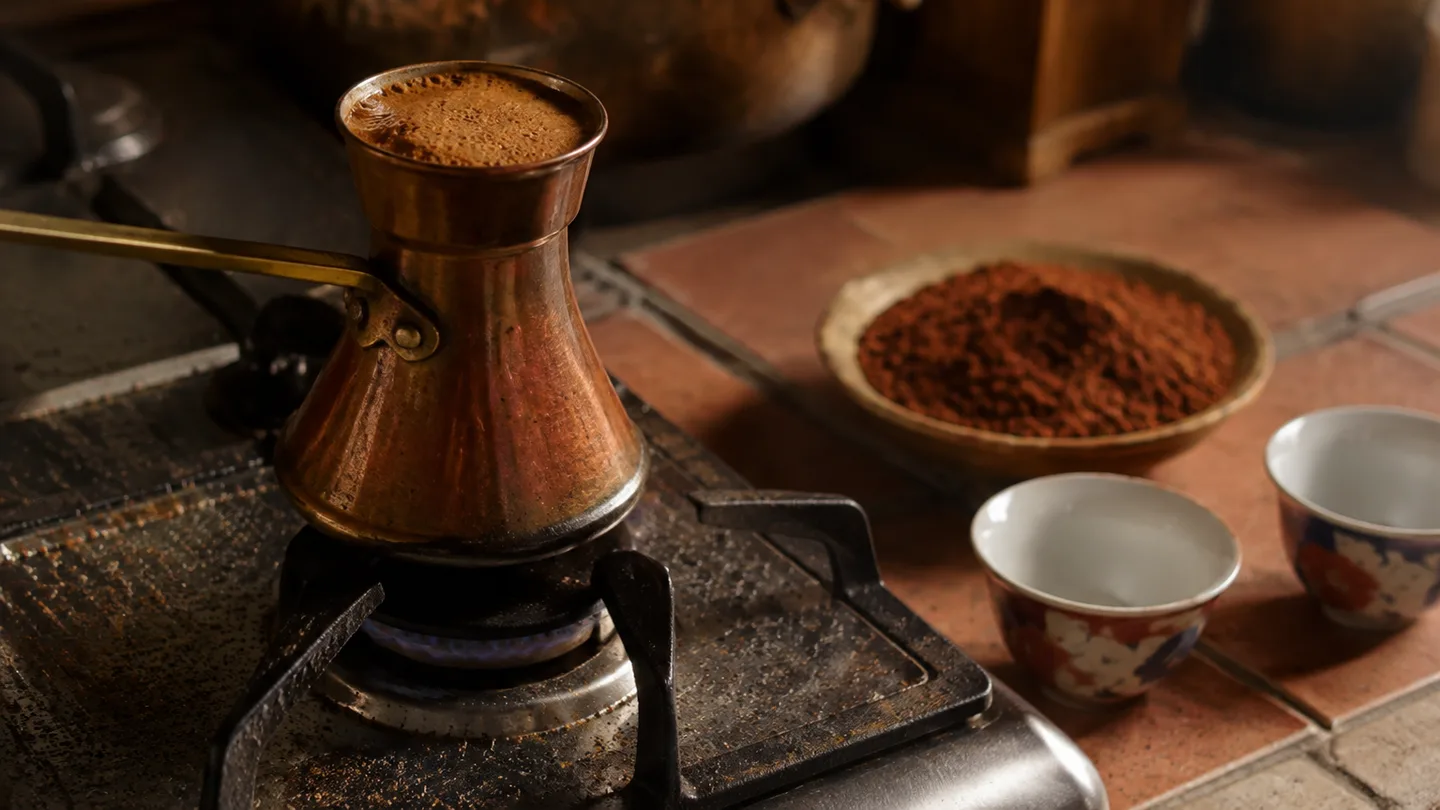 Coffee Traditions
Turkish Coffee Pot Guide: Cezve Size, Heat, and Foam
Choose a Turkish coffee pot by volume, neck shape, heat response, and foam control. This practical cezve guide covers size, ratios, materials, and pouring.
Beans, Roasting & TastingView all →
 Roasting & Tasting
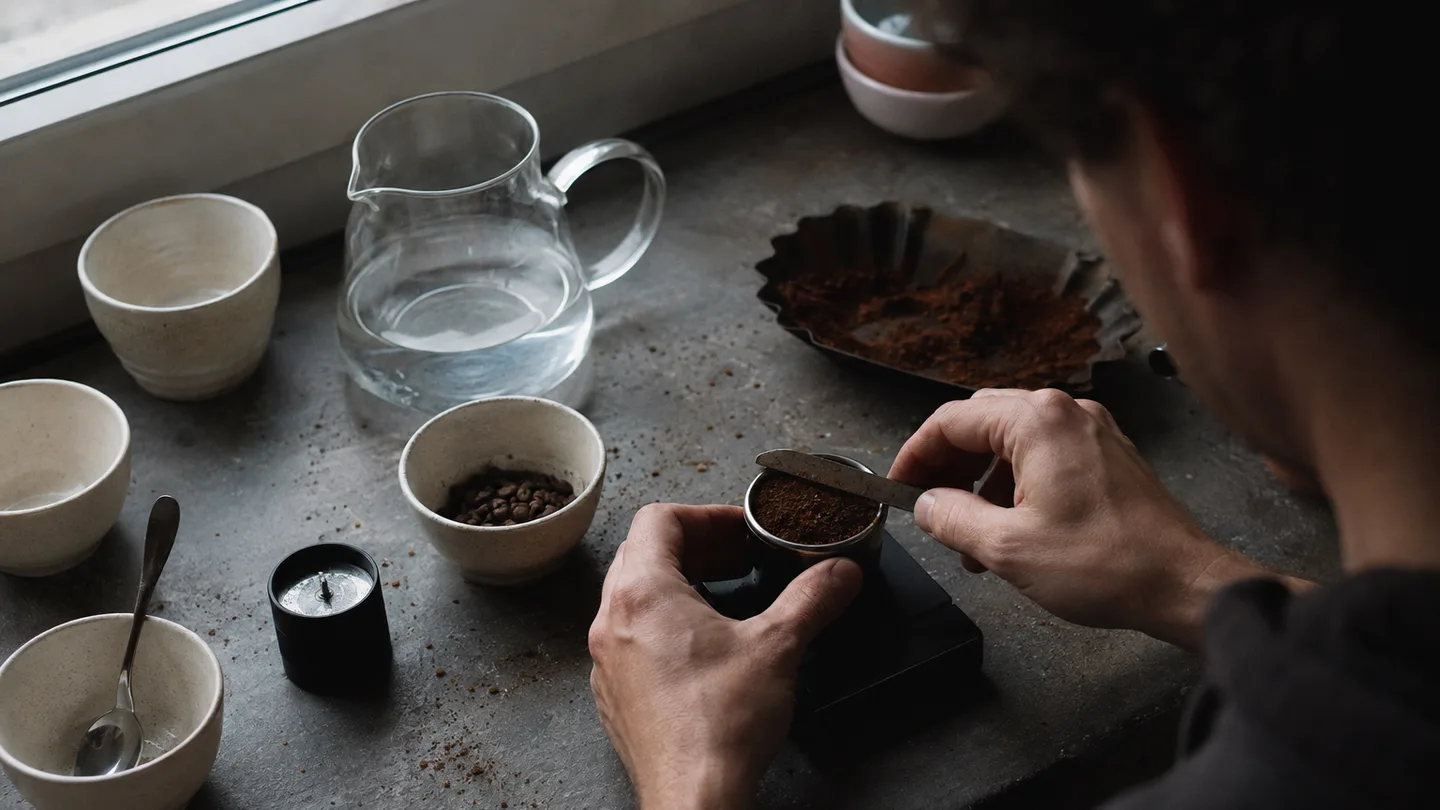
Coffee Cupping Ratio: 8.25 g per 150 ml, Explained
Learn why the coffee cupping ratio uses 8.25 g per 150 ml, how to scale it, and how grind, heat, and contact time change repeatable home tastings.
 Roasting & Tasting
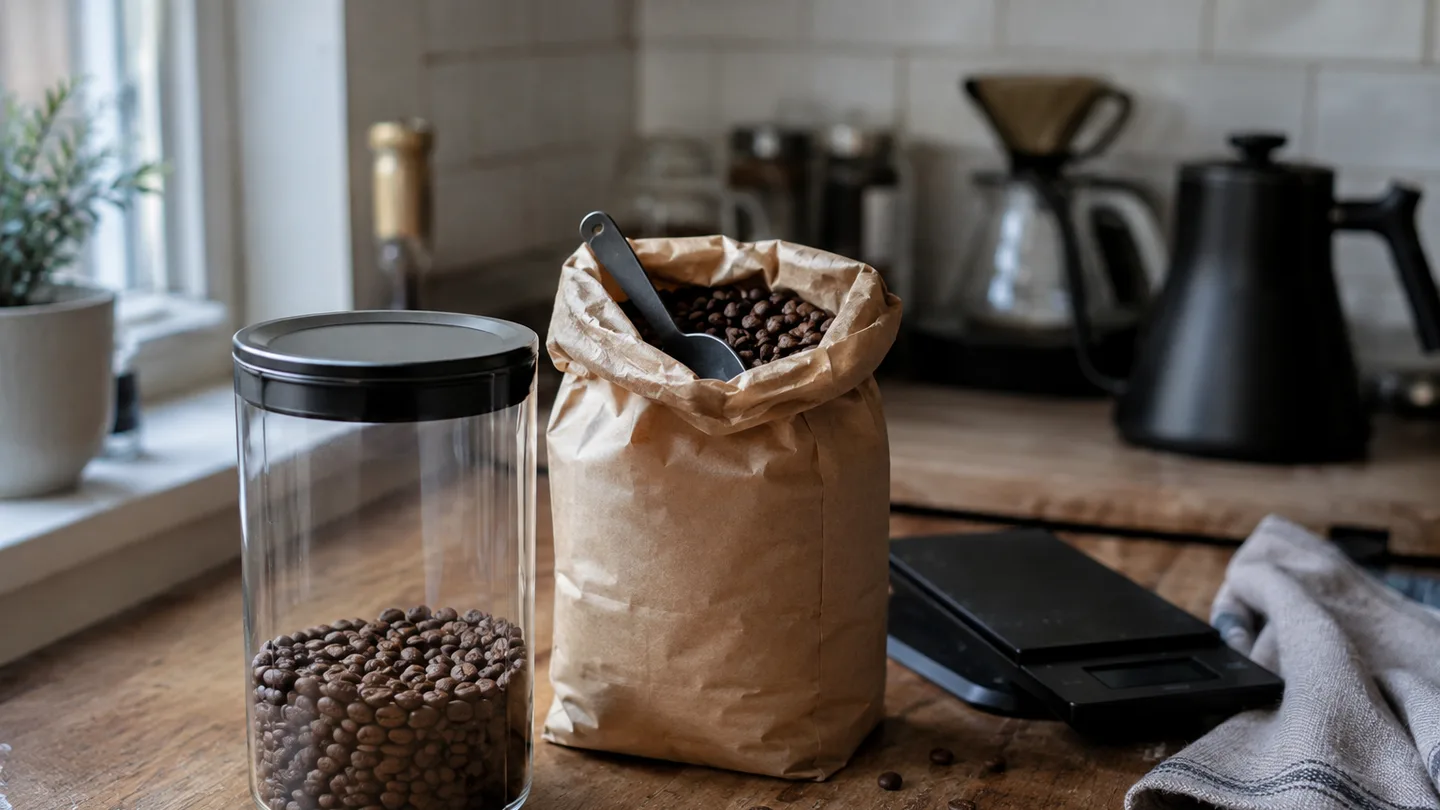
How to Store Coffee Beans Without Stale, Flat Flavour
Learn how to store coffee beans without flat flavour: choose the right container, avoid heat and moisture, manage degassing, and freeze surplus safely
 Roasting & Tasting
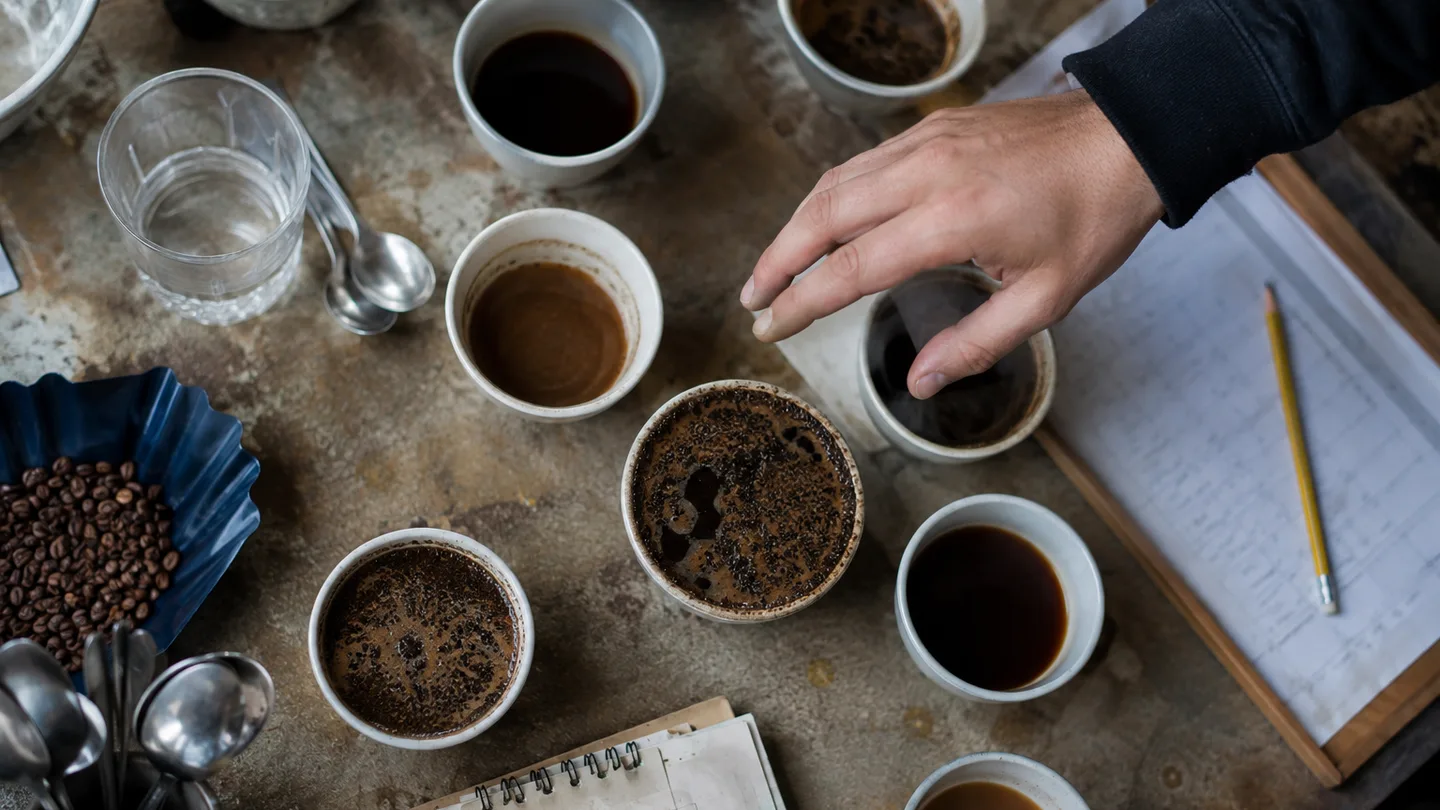
What Is a Good Coffee Cupping Score? 80+ Is Usually Good
What is a good coffee cupping score? Learn why 80+ is usually good, what 85 and 90 signal, and how to compare published scores with your own palate.
Brewing FundamentalsView all →
 Fundamentals
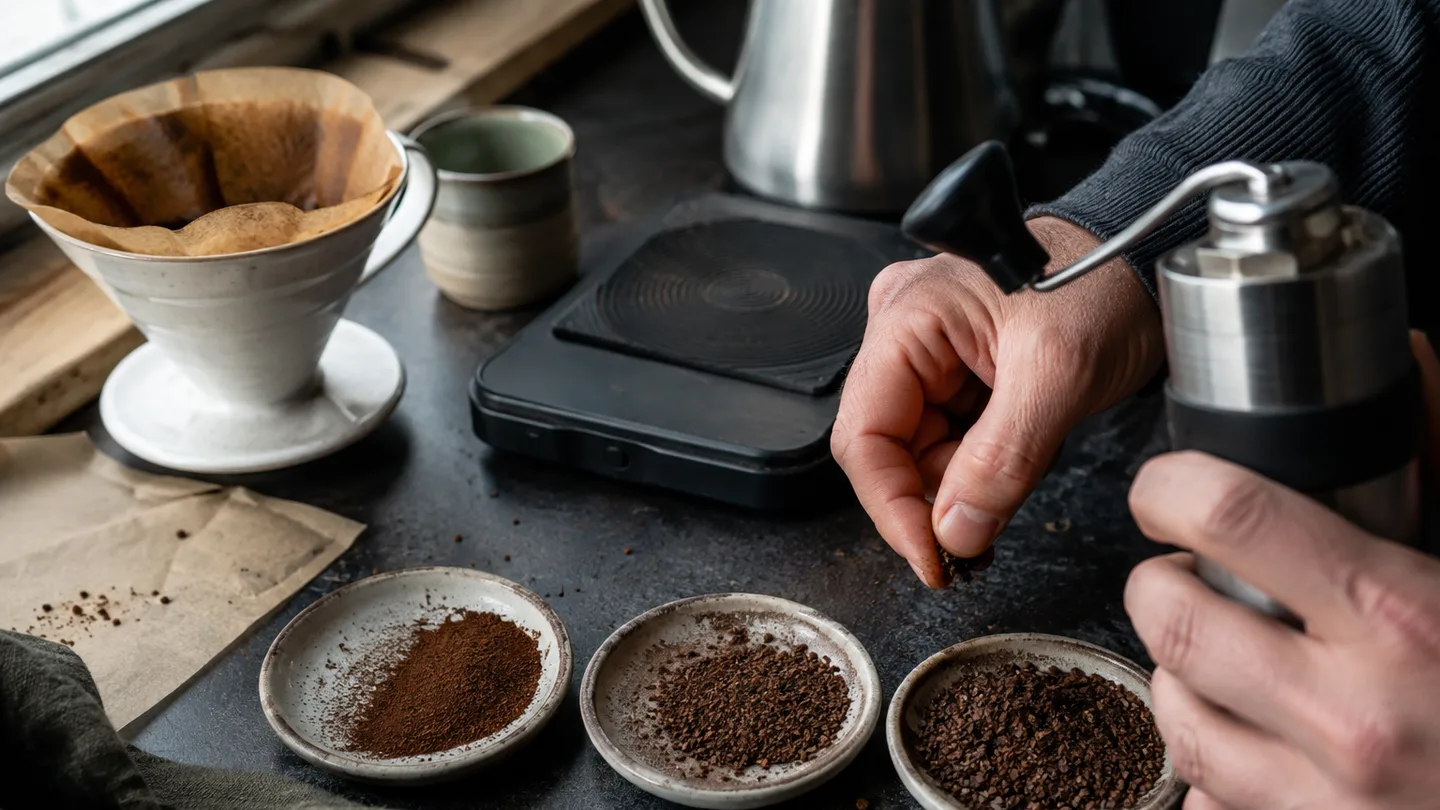
Coffee Grind Size Chart: Fix Sour, Bitter, Thin Cups
Use this coffee grind size chart with brew time and taste to fix sour, bitter, or thin coffee. Dial in espresso, pour-over, French press, and cold brew.
- Fundamentals
Coffee to Water Ratio Calculator: Grams, Tablespoons and Cups
Work out the coffee dose for any brewer in grams, level tablespoons or scoops - seven methods, three strengths, and how much liquid you actually end up with in the c
 Fundamentals
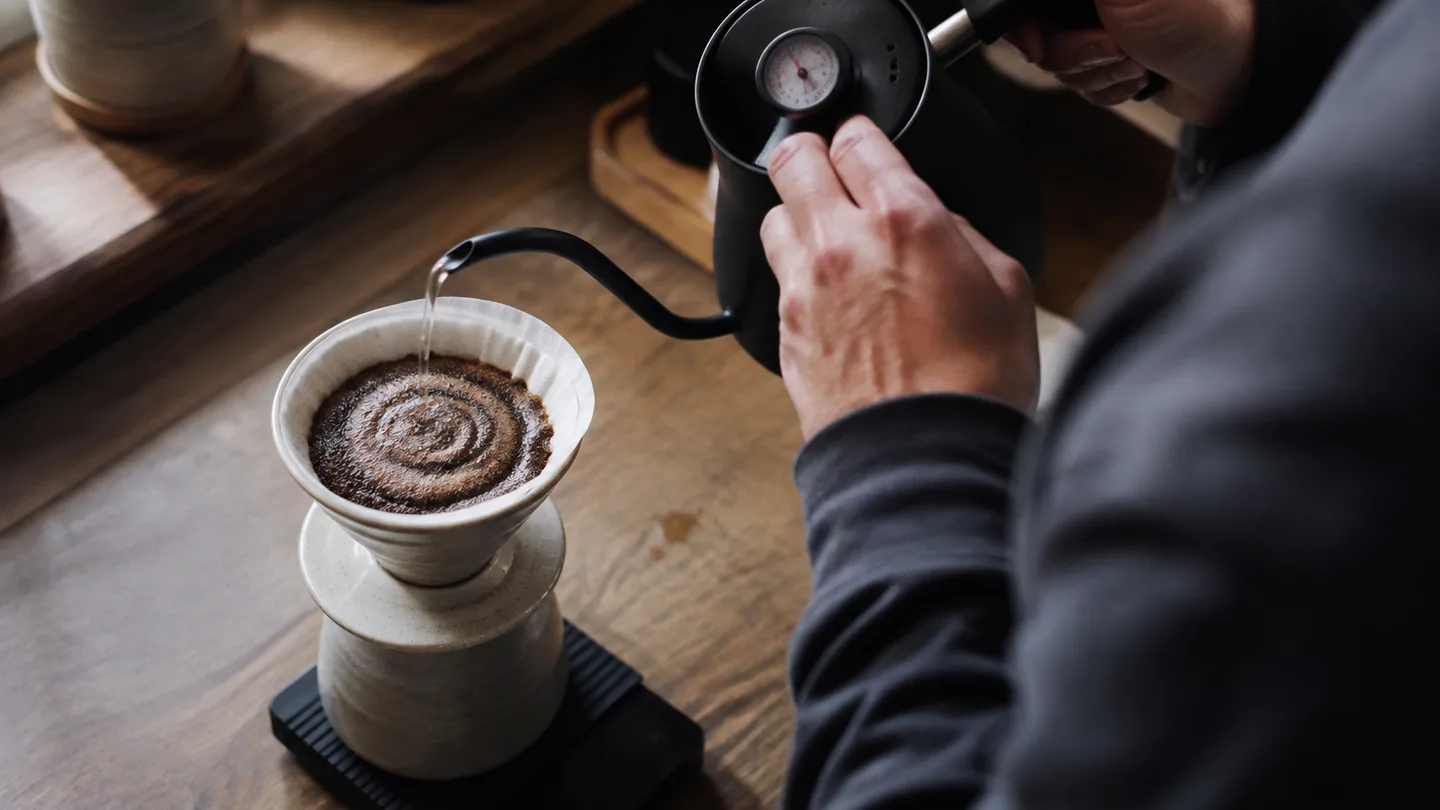
Water Temperature for Pour Over Coffee: 90–96°C Explained
Learn how 90–96°C changes pour over extraction, where to start by roast level, and how to test temperature without confusing heat with grind.
Start here
- Coffee Cupping: A 10-Minute Protocol for Comparing Beans
- Cold Brew Coffee Ratio: 1:8 or 1:5 for Your Batch?
- Espresso Drinks Explained: Ratios, Milk, and Foam at Home
- French Press Coffee: The 1:15 Ratio for a Cleaner Cup
- Pour Over Coffee Ratio: Start at 1:15, Then Adjust
- Turkish Coffee: The Fine Grind, Ratio, and Heat Explained
More to read
- Cold Brew Coffee Ratio Explained: 1:4 vs 1:8 vs 1:10
- Cold Brew Coffee vs Iced Coffee: Which Should You Pick?
- Espresso Drinks Without Milk: 7 Orders Worth Knowing
- Flat White vs Latte: The Milk Ratio That Sets Them Apart
- French Press Coffee: The 1:15 Ratio for a Cleaner Cup
- French Press Coffee How to Make in 6 Simple, Measured Steps
- French Press Coffee Ratio: 1:15 or 1:17? Taste the Difference
- Pour Over Coffee Ratio: Start at 1:15, Then Adjust
- Pour Over Coffee Filter: Paper vs. Metal, Explained
- Pour Over Coffee Instructions: 1:15 Ratio, 30-Second Bloom
- Pour Over Coffee Ratio: The 1:15 Rule and When to Break It
- Pour Over Coffee vs French Press: Which Should You Choose?