Do You Add Milk to Turkish Coffee? Usually, No—Here's Why
Do you add milk to Turkish coffee? Usually, no: the classic small cup is brewed with water and served without dairy. Milk is perfectly workable, but it creates a different build, changes the foam and aroma, and can hide a problem that should have been fixed with dose or heat.
Put a 60 mL cup beside the cezve and weigh 6 g of coffee. That tiny setup makes the choice clear: plain water gives you the traditional extraction, brewing with milk gives you a heavier drink, and adding milk after pouring gives you the most control over the final texture.

The standard cup is water-only: what “usually” means
In the classic version, finely ground coffee is combined with water in a cezve, heated until the surface foam rises, and poured directly into a small cup. Milk is not part of that default build. That is the short answer to the question in the title.
Usually does not mean never. Turkish coffee is made in homes, cafés, and restaurants, and people adapt familiar drinks to the ingredients and textures they enjoy. A milk-based cup is not a mistake; it is simply no longer the plain water-based version.
The cezve is the small turkish coffee pot used for this style. Its narrow shape helps create a visible foam layer as the mixture heats, while the absence of a paper filter means the fine grounds remain in the cup. The small serving size matters too. A 50–70 mL serving leaves little room for dilution, so a small change in coffee dose or liquid volume shows up quickly.
The wording used for milk versions is useful here. The phrase sütlü Türk kahvesi names the milk-based variation rather than treating milk as an invisible part of every traditional cup. That distinction is why the honest answer is usually no, not an absolute no.
For cultural context beyond the kitchen, UNESCO documentation of Turkish coffee culture and tradition is a useful reference. If you want to rescale the recipe for a different cup, a coffee to water ratio calculator can keep the liquid and dose moving together instead of relying on a much larger scoop.
What milk changes in a 50–70 mL Turkish coffee
Milk is not just flavored water. In a small cezve brew, replacing part of the water changes both what happens during extraction and how the finished drink feels in your mouth.
Those are separate effects. The water portion still does most of the coffee extraction, meaning it dissolves and carries soluble flavor compounds out of the ground coffee. Milk fat, proteins, and lactose then alter the drink’s thickness, aroma release, sweetness, and surface behavior.
| Part of the cup | Water-only build | Milk replacing some liquid |
|---|---|---|
| Extraction | The water, dose, grind, and heating path are easier to isolate. | The water portion still extracts coffee, but milk solids change the mixture’s behavior around the particles. |
| Body | Concentrated and direct, with a relatively clean finish for the style. | Rounder, thicker, and heavier because dairy solids add weight and coat the palate. |
| Aroma | Roast and spice notes arrive more directly. | Milk can soften sharp aromas and make delicate notes less obvious. |
| Foam | The foam is made from the hot coffee mixture and its fine particles. | Milk proteins and fat create a different surface structure, which may look thicker but will not behave like classic coffee foam. |
That last point is easy to miss. Turkish coffee foam is not the same thing as steamed-milk microfoam. It is a temporary layer formed as the heated coffee mixture releases gas and carries oils and fine particles toward the surface. Milk can make the top look more opaque or creamy, but it can also make the familiar coffee foam less distinct.
Milk also changes the heat decision. A water-only mixture gives you a fairly direct visual cue: the foam climbs, and you remove the cezve before a rolling boil. With milk present, proteins can stick to a hot surface and form cooked flavors before the coffee itself looks obviously burned. Low heat is therefore not just a tradition-friendly choice; it gives you more time to stop the brew before the bottom scorches.
Milk can make an intense cup seem gentler because fat and protein soften the edges of bitterness and acidity. It does not remove the compounds that created the harsh taste. If the coffee has been pushed too far by high heat or a large dose, dairy changes your perception of the fault rather than reversing the extraction.
For the chemistry behind that change, food-science references on milk fat and proteins in heated coffee can help separate aroma and mouthfeel effects from extraction itself.
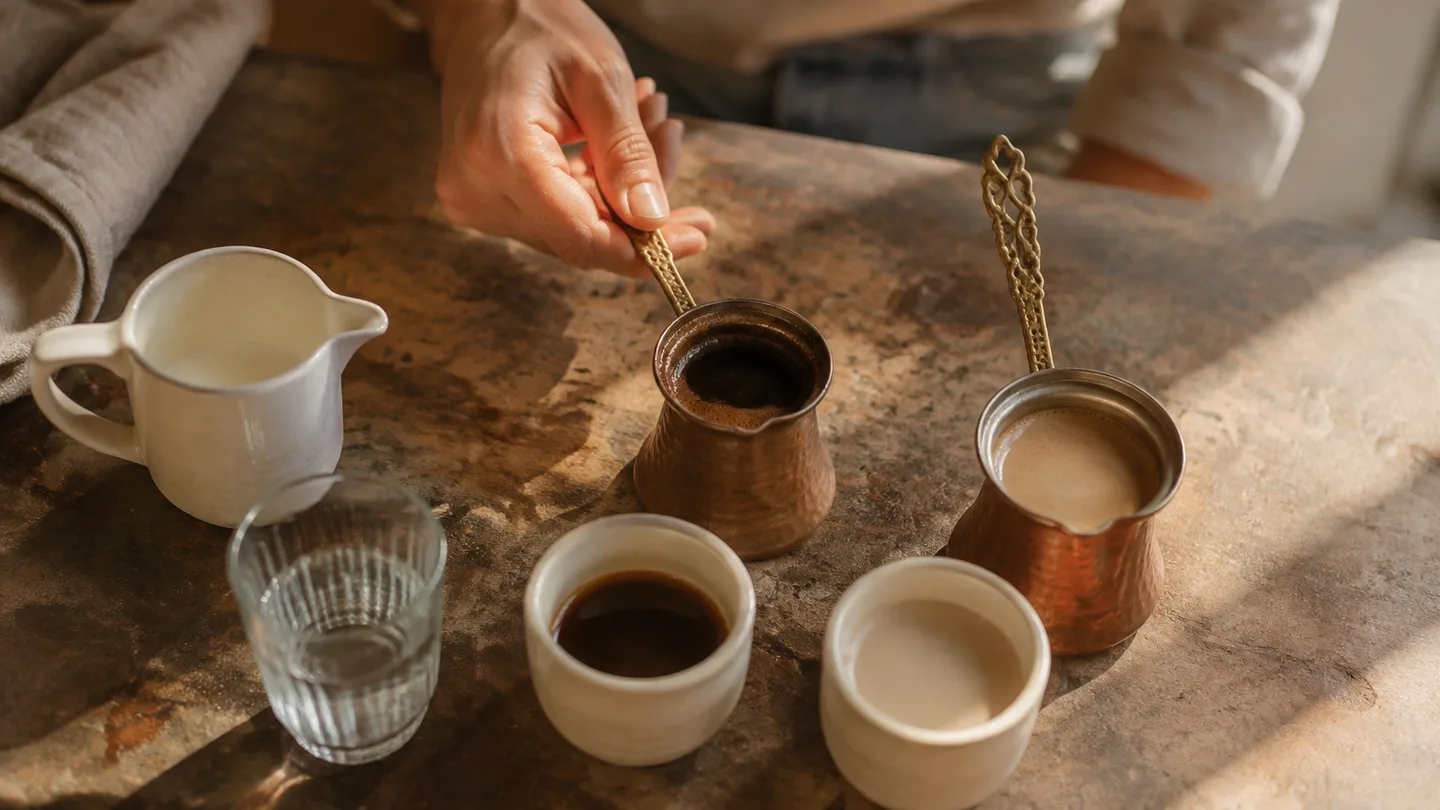
Brewed with milk, added afterward, or served alongside: three different choices
1. Brew the coffee with milk
Choose this route if you want dairy inside every sip. Start with 5–7 g of coffee and 50–70 mL total liquid. A practical first mixture is 20–30 mL water plus 30–40 mL milk; increasing the milk toward 50 mL makes the dairy character more dominant while leaving less water for extraction.
Combine the liquids, coffee, and any sugar in the cezve before heating. Stir once so the coffee is evenly wetted, then use low heat or medium-low heat. The surface may rise more slowly, and the foam may look paler or thicker. Remove the pot as soon as the top swells rather than waiting for a vigorous boil.
This version gives the fullest body, but it is the least forgiving. If the cup tastes both milky and burnt, the milk did not cause the coffee to over-extract by itself; the problem is that the mixture stayed too hot for too long. The dairy simply makes the scorched note harder to diagnose.
2. Add a small splash after brewing
Adding milk after brewing is the easiest method to control. Brew the standard water-based cup, pour it, and add 10–20 mL milk. Use warm milk if you want to preserve more heat, or add it at room temperature when a softer, cooler drink is the goal.
This approach keeps extraction separate from dairy. You can taste the black coffee first, then add a teaspoon at a time until the cup feels right. The trade-off is that the milk can flatten some aroma and collapse part of the surface foam as it enters the cup, especially if the milk is cold.
3. Serve milk alongside
Serving milk separately gives the classic coffee the clearest stage. You can taste the water-based cup as brewed, then take a small sip with milk rather than committing the whole serving to one texture.
This is the best option when you are comparing coffees or trying to understand a new roast. It preserves the original extraction and makes the dairy a deliberate pairing. It is also the most reversible choice: once milk is mixed into the cup, you cannot get the plain version back.
The use-case verdict is straightforward. For traditional flavor, choose no milk or serve it separately. For a thick, dessert-like cup, brew with milk. For easy adjustment at home, add 10–20 mL after pouring. The answer depends on the drink you want, but it does not need to depend on guesswork.
A classic one-cup method: 5–7 g coffee, 50–70 mL water, 2–4 minutes
Start with a water-only baseline: 6 g coffee, 60 mL water, and optional sugar. This is not the only valid ratio, but it is a useful test size because the cup is small enough to taste concentrated and the variables are easy to weigh. If your serving cup is larger, scale both coffee and water rather than adding water at the end and calling it the same brew.
- Grind the coffee very fine. A Turkish-fine grind should look closer to powder than table salt. A Turkish coffee grind size chart is useful if your grinder produces visible grit or a texture closer to espresso.
- Measure the liquid first. Use 50–70 mL cool or room-temperature water for one small cup. Measuring into the serving cup before transferring it to the cezve is a simple way to avoid guessing the volume.
- Add coffee and sugar before heating. Add the 5–7 g dose and the sweetness you want, then stir once. Add the sugar before heating if you are using it; it dissolves into the brew instead of sitting on the surface afterward.
- Heat gently. Aim for about 2–4 minutes from heat-on to foam lift, recognizing that burner power, cezve size, and starting temperature can move that window. The useful cue is a dark foam ring and a surface that begins to swell at the edges.
- Remove before a rolling boil. A rolling boil is the point to avoid. Once large bubbles break across the surface, the foam becomes less stable and the brew has had a chance to pick up a rougher, more cooked taste.
- Pour steadily. Pouring from low height helps keep the foam intact. Tilt the cezve and let the coffee run into the cup without splashing it from above. If the foam is important, pour the first part gently, then finish with the rest.
- Let the grounds settle. Wait roughly a minute or two before drinking. The grounds remain because this method has no paper filter, and the finest particles need time to drop through the liquid.
For a concrete test tonight, use 6 g coffee, 60 mL water, and 2 g sugar. Stir once, heat on a low setting, and remove the cezve when the foam reaches its highest point without breaking into a boil. Taste the first few sips before deciding whether the next cup needs milk. That order matters because it tells you whether the issue is extraction or simply a preference for more body.

Three quick fixes while the pot is still on the stove
If the foam disappears, check the heat first. A fast, aggressive rise usually gives you less time to stop at the foamy stage, while stirring repeatedly after the surface has formed breaks the bubble layer. Use lower heat on the next cup and stop earlier.
If the coffee scorches, the base of the cezve has stayed hot after the foam lifted or the burner is too strong for the small volume. Move the pot off the heat immediately when the surface swells, and avoid placing it back on a hot burner between cups.
If the cup tastes thin, check the dose, water volume, and grind before reaching for milk. Too much water lowers concentration, too little coffee lowers intensity, and a grind that is not fine enough can leave extraction incomplete before the mixture is removed from the heat.
If the cup tastes too intense, fix the extraction before adding dairy
Intensity is not one fault: concentration and harshness are different problems. A clean cup can be strong because the coffee-to-water ratio is high. A rough cup can be bitter because the particles were extracted too aggressively or the mixture scorched. Milk is useful only after you know which of those you are trying to change.
| What you taste | Mechanism to consider | First adjustment |
|---|---|---|
| Bitter, dry, or ashy | Over-extraction or scorching from too much heat, too much contact, or too large a dose. | Lower the heat and remove the cezve earlier on the next cup. |
| Sour or sharply thin | Under-extraction: the water did not draw enough soluble material from the very fine grounds. | Keep the dose fixed and extend the gentle heating phase by about 20–30 seconds. |
| Weak but not harsh | Low concentration from excess water or an under-sized dose. | Reduce the water by 5–10 mL before changing the grind. |
| Clean but too strong | The extraction is acceptable but the final concentration is higher than you want. | Add 10–20 mL hot water after brewing. |
| Very gritty | The grind is too coarse or uneven, leaving larger particles among the powder-fine grounds. | Grind finer or improve particle uniformity, then let the cup rest before tasting. |
| Flat or papery | Much of the coffee’s volatile aroma has faded during storage. | Use a fresher coffee or improve the storage container before changing the recipe. |
For a bitter or ashy cup, lower the heat before changing anything else. That single move tests whether the harshness is coming from the heating path rather than the bean or the dose. If the next cup is still too rough, reduce the coffee by about 0.5–1 g. Make one change at a time so the result teaches you something.
For a sour or sharp cup, give extraction more gentle time. Do not solve a sharp cup by adding milk immediately; the dairy may soften the sensation while leaving the coffee under-extracted and hollow. If the cup is clean but simply too strong, hot water is the better correction because it changes concentration without adding a new flavor system.
Water changes concentration, sugar changes sweetness, and milk changes texture and aroma. They are not interchangeable fixes. Sugar will not remove dryness, water will not add dairy weight, and milk will not undo a scorched base.
The most useful rule for this drink is also the least glamorous: change one variable per cup. Hold the 6 g dose steady while you adjust heat, or hold the heat steady while you change the water. Once the water-only cup tastes balanced, milk becomes a choice rather than camouflage.
Use milk when you want milk, not when you want to hide extraction. The shortest answer remains: no for classic Turkish coffee, yes for a named milk variation, and either way works best when the dose, liquid, grind, and heat are under control.