Coffee Cupping Chart: 36 Tasting Notes to Use at Home
If every coffee becomes “fruity,” the problem may be your vocabulary rather than the beans. Use a four-minute cupping reset: keep the dose, water, grind, and temperature fixed, then taste the same cup at two cooling points before choosing a more specific note.
Extraction, the process of dissolving coffee-soluble material into water, changes with every brewing variable. A coffee cupping chart gives you a controlled set of words for comparing that result; it does not prove that flavoring was added, and it does not make one descriptor objectively correct.
The useful question is not “Does this taste like peach?” in isolation. Ask whether peach is the closest match among several references, whether it appears warm or cool, and whether the same recipe produces it again.
If every coffee tastes “fruity,” start with a 4-minute cupping reset
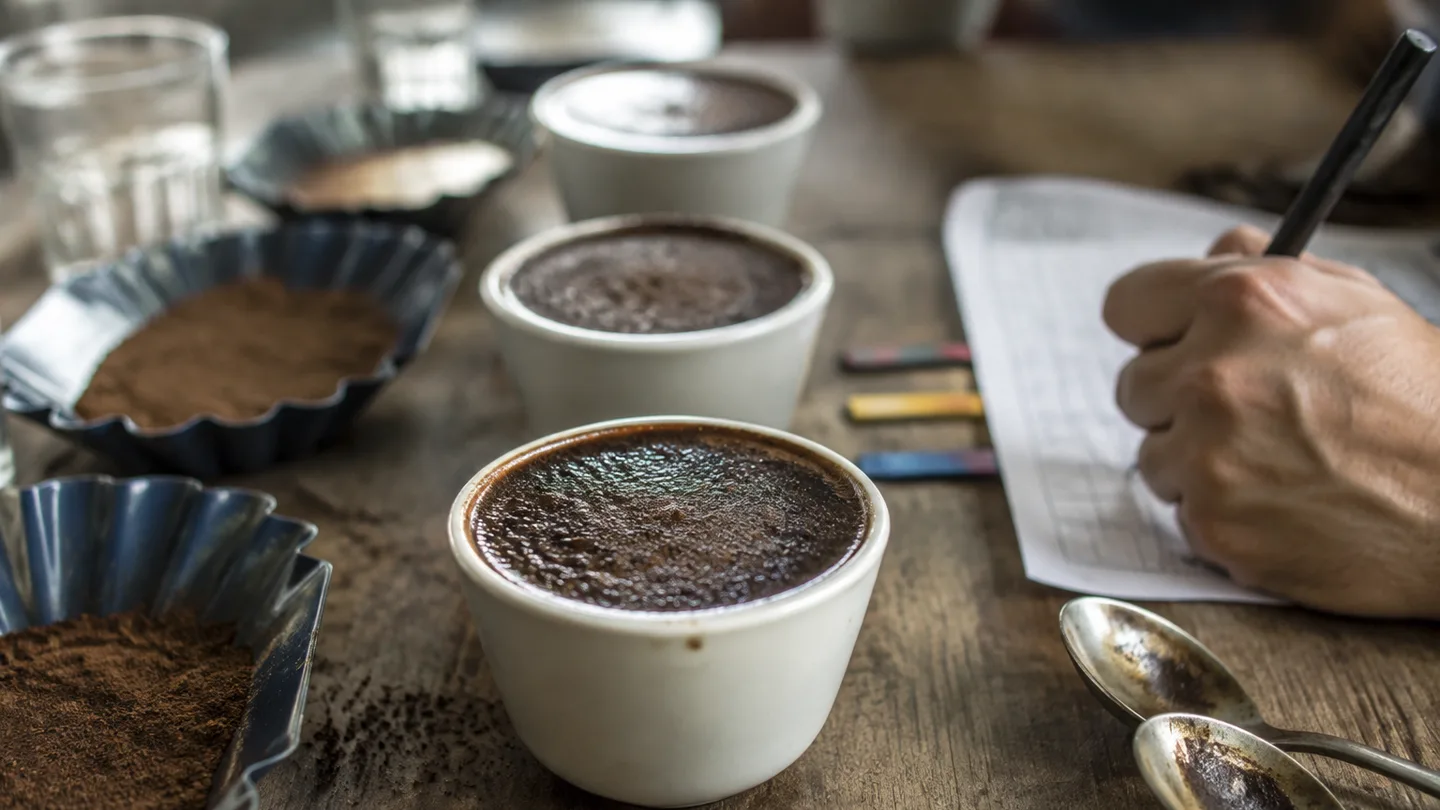
Set up one cup as a simple immersion brew. Measure everything, pour on schedule, break the crust at four minutes, skim the floating grounds, and leave the cup alone until it is safe to taste. Then compare your first notes at roughly 10 minutes with a second pass at 15–20 minutes.
If the cup is still broadly fruity, narrow the family. Is the impression sharp and peel-like, round and juicy, soft and stone-fruit-like, or jammy? That sequence moves you from a category to a defensible descriptor without pretending your palate is a laboratory.
The repeatable home recipe: 8–9 g, 150 mL, and 92–96 °C
For a home comparison, use 8–9 g of coffee for 150 mL of water. That works out to approximately a 1:17–1:19 brew ratio, a useful range for tasting several coffees without making the cups so concentrated that bitterness dominates. Use a medium-coarse grind, water between 92 and 96 °C, and four or five cups if you are comparing multiple coffees.
If you want to adjust the coffee cupping ratio for a stronger or lighter session, record the change. A consistent 8–9 g dose, water volume, grind, and temperature make the tasting more about the coffee and less about accidental extraction differences.
- Place the dry grounds in identical cups and smell them before adding water.
- Pour the full 150 mL into each cup within about 15 seconds.
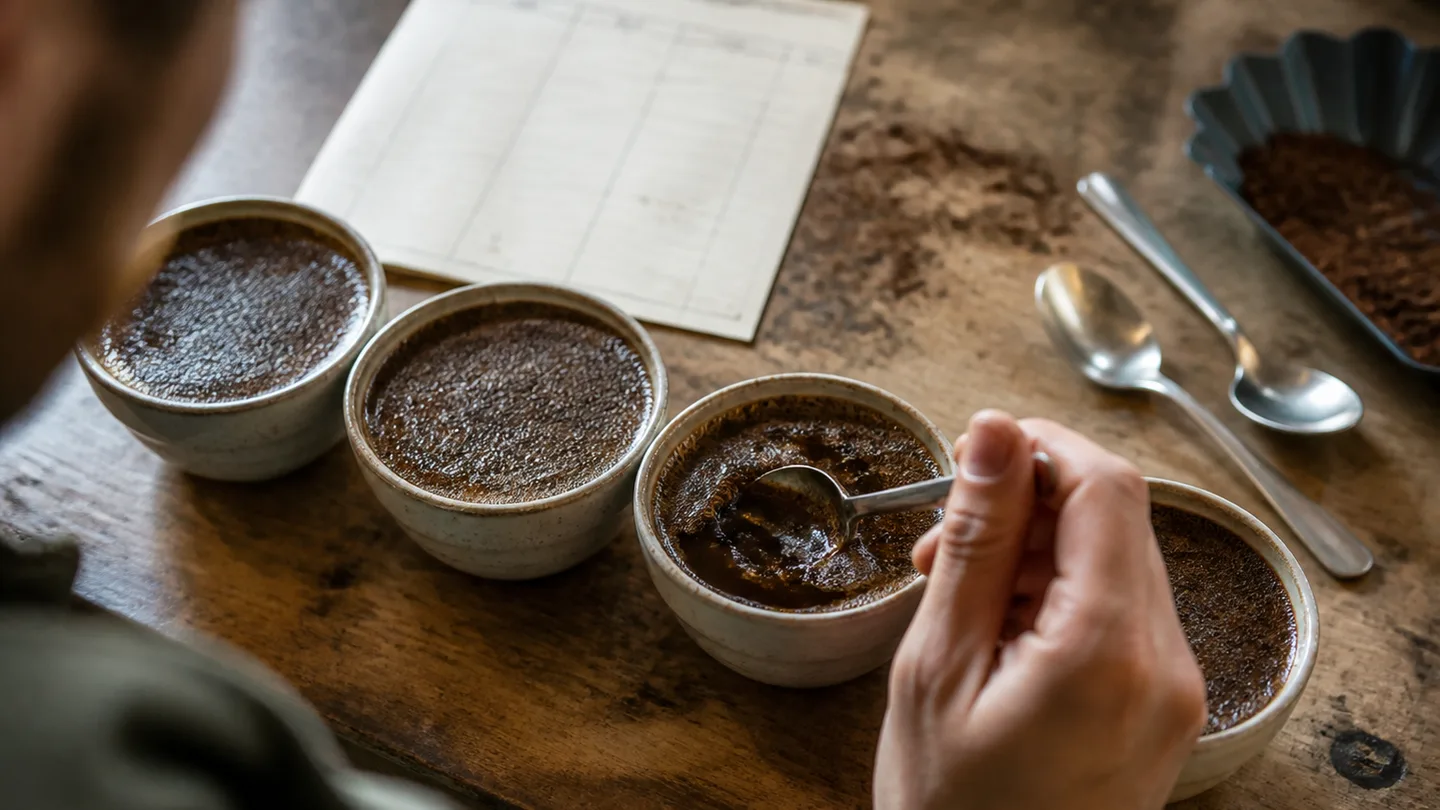
- Leave the crust intact until the four-minute mark, then break it with a spoon using a few gentle strokes.
- Skim foam and floating grounds from the surface. Avoid stirring the sediment at the bottom.
- Taste from roughly 8–12 minutes onward, then repeat as the cups cool.
The exact grind setting depends on the grinder and bean density, so the time and ratio matter more than copying a numbered dial position. If the cups finish at different strengths, use the coffee grind size chart as a separate extraction reference rather than changing the cupping recipe halfway through.
The 36-note coffee cupping chart: six families, six useful anchors
This is a practical home coffee flavor chart, not a complete sensory lexicon. The six families help you search your memory in an orderly way; the nearby descriptor in each line helps prevent two similar impressions from collapsing into one vague word.
Fruit
- Lemon: sharp peel-like citrus; separate from lemongrass.
- Orange: round, juicy citrus; separate from orange blossom.
- Apple: crisp, fresh lift; separate from peach.
- Peach: soft, ripe stone fruit; separate from honey.
- Berry: jammy red or dark fruit; separate from winey.
- Tropical fruit: ripe mango or pineapple; separate from fermented.
Floral
- Jasmine: light, sweet perfume; separate from black tea.
- Rose: petal-like perfume; separate from lavender.
- Orange blossom: citrus-floral lift; separate from orange.
- Honeysuckle: nectar-like floral sweetness; separate from honey.
- Chamomile: dried apple and hay-like floral; separate from black tea.
- Lavender: cool, aromatic floral; separate from rose.
Sweet
- Brown sugar: dry, molasses-like sweetness; separate from caramel.
- Caramel: cooked-sugar richness; separate from brown sugar.
- Honey: round, floral sweetness; separate from honeysuckle.
- Maple: woody syrup sweetness; separate from molasses.
- Molasses: dark, treacly sweetness; separate from tobacco.
- Vanilla: soft, creamy sweetness; separate from cocoa.
Nutty and cocoa
- Almond: clean, marzipan-like nuttiness; separate from hazelnut.
- Hazelnut: toasted, round nuttiness; separate from almond.
- Peanut: earthy, roasted nuttiness; separate from walnut.
- Walnut: dry, tannic nuttiness; separate from peanut.
- Cocoa: dry, unsweetened chocolate; separate from dark chocolate.
- Dark chocolate: deeper, bittersweet cocoa; separate from cocoa.
Spice and wood
- Cinnamon: sweet, warming spice; separate from clove.
- Clove: sharp, cooling spice; separate from cinnamon.
- Black pepper: dry, prickly heat; separate from clove.
- Cardamom: cool, camphor-like spice; separate from lavender.
- Cedar: dry, pencil-wood impression; separate from tobacco.
- Tobacco: dry, leaf-like depth; separate from cedar.
Tea, herbal, earthy, and ferment
- Black tea: tannic, drying infusion; separate from cocoa.
- Lemongrass: green, citrusy herb; separate from lemon.
- Tomato: savoury, garden-like acidity; separate from red fruit.
- Earthy: damp soil or root note; separate from tobacco.
- Winey: grape-skin, fermented-fruit impression; separate from berry.
- Fermented: boozy, cultured-fruit character; separate from winey.
Use the list as a set of reference anchors, not a test you can pass or fail. For a broader vocabulary, compare it with the World Coffee Research Sensory Lexicon or the Specialty Coffee Association Coffee Taster’s Flavor Wheel, then return to the shorter chart for everyday notes.
Follow the cup as it cools: fragrance at 0 minutes, flavor at 10, finish at 20
A rushed sip makes warm aroma and actual flavor blur together. Start your clock before the pour and record where a note appears.
- Before water: smell the dry grounds. This is fragrance, and it can suggest fruit, flowers, spice, or roast.
- Immediately after pouring: smell the wet crust. Steam carries volatile aromatic compounds upward, so the cup may seem more floral or sweet than it later tastes.
- At four minutes: break the crust and smell again. The spoon releases trapped gas and changes what reaches your nose.
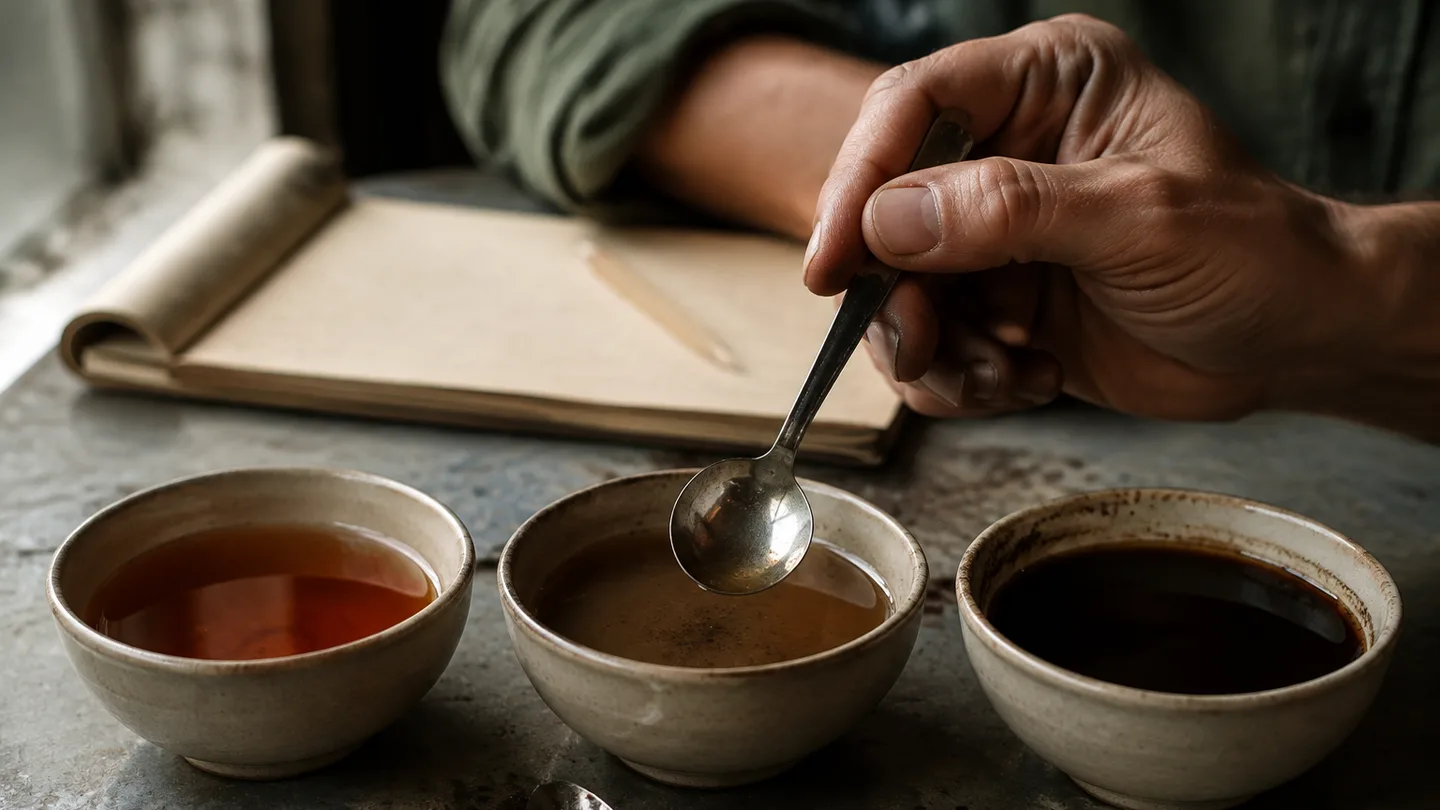
- At 8–12 minutes: take the first proper tasting. Slurp a small amount so the coffee spreads across your palate and mixes with air.
- At 15–20 minutes: check sweetness, acidity, body, and finish again. An optional check near 25 minutes can expose drying bitterness or a late earthy note.
Cooling changes how volatile aromas reach your nose and how you perceive acidity, sweetness, and body. A note that appears only while the cup is hot should be recorded that way, such as jasmine, strongest warm; a note that arrives later may be more useful for the final flavor description.

One primary note, one supporting note, one finish: the 1–5 intensity rule
Do not write ten adjectives because the cup gave you ten fleeting associations. Use a 1–5 intensity scale: 1 means barely detectable, 3 means clear, and 5 means dominant. Add a confidence label such as low, medium, or high so a guess does not look as firm as a repeatable observation.
Keep the final record to three jobs: one dominant descriptor, one supporting descriptor, and one finish descriptor. Aroma and flavor can disagree. A coffee may smell like jasmine when hot, taste like peach at 10 minutes, and leave a black-tea dryness after swallowing.
Filled example: peach, 4/5, strongest warm; honey, 3/5; black tea finish, 2/5; medium confidence. That note is more useful than a list of fruit, flowers, sugar, spice, chocolate, and wine with no intensity or timing attached.
When “lemon” is really under-extraction: separate bean character from brew faults
A tasting note should survive a simple diagnostic check. Lemon-like acidity with sweetness and a clean finish can be a useful bean descriptor; sharp sourness paired with a thin, hollow body points toward under-extraction, meaning too little soluble coffee material moved into the water.
| What you taste | Likely mechanism | First controlled change |
|---|---|---|
| Sharp sourness and thin body | Under-extraction | Grind one step finer |
| Bitter, drying, or astringent finish | Over-extraction or uneven fines extraction | Grind one step coarser |
| Muddy, silty, heavy cup | Fines migration or disturbed sediment | Stop stirring after the crust break |
| Weak but clean cup | Low strength rather than necessarily low extraction | Move from about 1:18 toward 1:16–1:17 |
Fines migration means very small particles move through the coffee bed or remain suspended in the cup. Those particles can extract quickly and add harshness, while the larger particles may still be under-extracted. If a finer grind is not practical, use one alternative change: raise water temperature by 2–3 °C for a sour cup, or lower it by 2–3 °C for a bitter cup. Keep agitation and timing fixed.
This is why you should change the brew before changing the tasting note. A cup can contain a real citrus character and still be brewed too cool; correcting extraction may turn a harsh lemon impression into a sweeter, more recognisable citrus note.
Roast and process are context, not proof of a tasting note
Roast development and processing change which descriptors are plausible, but neither one dictates what you must taste. Lighter development can leave floral and citrus impressions more noticeable because delicate aromatic signals are less covered by roast flavour. More developed roasting can push cocoa, spice, tobacco, and darker sugar impressions forward.
Washed coffees often present a cleaner, more tea-like profile, while natural or extended-fermentation coffees can show stronger berry, winey, or fermented associations. Treat those as starting hypotheses. The cup has the final vote.
Record the roast date beside every note. A practical comparison rule is to avoid judging coffees with a roast-age gap of more than about seven days if you can, because degassing and aging can change aroma release. If you need a storage refresher, use how to store coffee beans before comparing a fresh bag with an older one.
A 3-cup, 6-reference calibration drill you can do tonight
You do not need a commercial flavor kit. Brew up to three coffees with the same 8–9 g per 150 mL recipe: ideally a washed lighter roast, a fruit-forward natural, and a more developed roast. If only one coffee is available, make the same cup twice or taste one cup at different cooling stages.
- Set out six separate references: lemon peel, apple or peach, dried berry, honey or brown sugar, cocoa, and cinnamon or black tea.
- Smell each reference once or twice. Do not add any reference ingredient to the coffee.
- Taste every cup at 10 minutes and again at 20 minutes.
- For each cup, mark three candidate families before choosing a specific note.
- Choose the closest-supported note, then give it an intensity and confidence rating.
References calibrate memory; they do not prove that the coffee contains the same ingredient or a single matching compound. Their job is to make the word lemon mean roughly the same thing to you next week that it meant tonight.
Save the final answer in three lines, not a cloud of adjectives
A useful cupping record should let you compare two coffees brewed under the same conditions and see whether the difference came from grind, temperature, ratio, or the beans themselves. Save the recipe with the tasting note, not on a separate page where the context disappears.
- Identity: coffee name, roast date, dose, water, ratio, temperature, grind description, and tasting time.
- Sensory record: dry or wet fragrance, primary note, supporting note, finish, intensity from 1–5, and confidence.
- Next dial: one change for the next brew, such as one step finer, 2 °C cooler, or a stronger ratio.
For the arithmetic, a coffee to water ratio calculator can remove one source of transcription error. The editorial rule is simple: three defensible descriptors beat ten guesses, especially when each one has a temperature, intensity, and confidence attached.
Questions readers ask about coffee cupping charts
Are coffee tasting notes added to the beans?
No. A tasting note describes an aroma or flavour resemblance produced by the coffee’s compounds, roast, processing, and brewing. Flavoured coffee is a separate category in which ingredients or flavouring are intentionally added.
What is the difference between a coffee cupping chart and a coffee flavor wheel?
This chart is a short home-brewing shortlist. A flavor wheel is a broader, hierarchical vocabulary that moves from general sensations toward more specific descriptors. Use the wheel when a family is clear but the exact word is not.
Can you use a coffee cupping chart for espresso?
Yes, but taste the espresso black first and keep the shot recipe consistent. A starting ratio such as 1:2 makes comparisons easier; milk, foam, concentration, and temperature can hide or reshape the descriptors you are trying to identify.
Frequently Asked Questions
Are coffee tasting notes added to the beans?
No. Tasting notes describe aromas and flavors produced by the coffee’s compounds, roast, processing, and brewing; flavored coffee is a separate category.
What is the difference between a coffee cupping chart and a coffee flavor wheel?
The chart is a short home-brewing shortlist of 36 practical anchors, while a flavor wheel is a broader hierarchical vocabulary designed to move from general sensations to more specific descriptors.
Can you use a coffee cupping chart for espresso?
Yes, but evaluate the espresso black first, ideally with a consistent shot ratio such as 1:2, because milk, foam, concentration, and temperature change how the descriptors present.