What Is Special About French Press Coffee? Full-Bodied Flavor
At a 1:16 ratio, a French press can feel thick and aromatic while a pour-over brewed with the same ratio feels lighter and sharper. French press coffee is special because its metal mesh leaves more coffee oils and fine particles in the cup.
That body is not the same thing as strength or caffeine, and the difference matters when you adjust the brew.
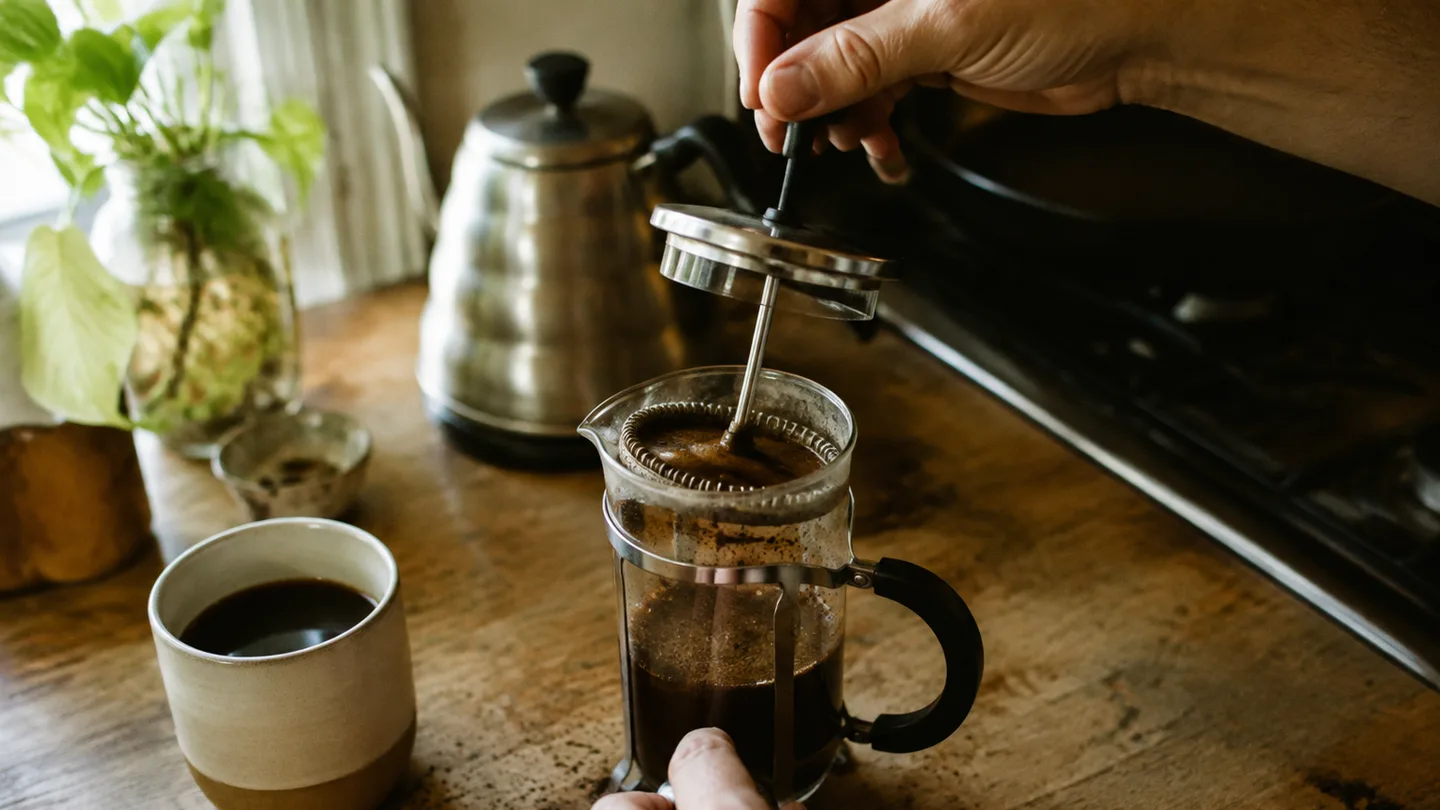
The short answer: French press leaves more of the coffee in your cup
The plunger's metal mesh is the main reason French press coffee tastes different. Compared with a common paper filter, it allows more oil-rich material and tiny suspended particles to pass into the finished drink instead of holding them back in the filter.
Full body means a heavier, more viscous mouthfeel. It can feel round, coating, and aromatic, but it does not automatically mean the brew is more concentrated or more bitter. A 1:17 French press may feel substantial yet taste diluted, while a 1:15 brew can taste intense without being especially muddy.
Why the metal filter feels fuller than paper
Paper and metal do not send the same part of the brew through. In a pour-over, paper holds back more oils and small particles as water passes through the coffee bed. French press mesh mainly stops the larger grounds, so the liquid carries more oils and fines into the cup.
Those fines are not just unwanted grit. While they remain suspended, they add physical weight and can make acidity feel less pointed. Once they settle, they form the sediment at the bottom of the cup, which is why the last few sips often taste heavier than the first.
A three-to-five-minute settling pause after breaking the crust can make the cup cleaner. The particles have time to fall instead of being pushed into suspension during the plunge. This does not produce paper-filter clarity, and the extra contact time can deepen extraction, so use the pause when sediment is the problem rather than as an automatic improvement.
The useful distinction is that the mesh changes what remains in the drink, not just how much coffee dissolves. For the narrower technical question, peer-reviewed research on coffee extraction, filter media, coffee oils, and suspended particles can clarify the difference between dissolved flavor material and undissolved texture.
The 1:15–1:17 starting ratio, and what four minutes actually changes
A brew ratio is the mass of coffee compared with the mass of water. With 30 g of coffee, 450 g of water gives 1:15, 480 g gives 1:16, and 510 g gives 1:17. At the same grind, temperature, and steep time, the lower water mass produces a more concentrated drink.
Use 1:15 when you want a denser, more forceful cup. Use 1:17 when you want more volume and less intensity. The dedicated french press coffee ratio guide is useful for comparing doses, while a coffee to water ratio calculator saves you from scaling the numbers by guesswork.
Four minutes is a starting point, not a law. A 3:30–5:00 immersion gives you a practical range for changing contact time, while roughly 92–96°C water gives you room to adjust heat. Grind size controls how quickly water reaches the coffee's soluble material: finer grounds generally extract more readily, while coarser grounds slow the process and usually produce less sediment.
If you are brewing a light roast, start near the hotter end of that range and watch the taste rather than the clock. The Specialty Coffee Association brewing standards are worth checking if you want to compare the formal meanings of ratio, temperature, and extraction terminology instead of searching for one supposedly universal French press recipe.
Body, strength, and caffeine are three different things
Think of the cup as having separate properties. Body is the sensation of weight and texture. Strength is how concentrated the dissolved coffee tastes. Caffeine is one compound among many in the brew, and its amount depends on the coffee dose, serving size, bean composition, and extraction conditions.
TDS, or total dissolved solids, is a shorthand for the concentration of dissolved material in the liquid. It helps describe strength, but it does not measure the oily slickness or suspended fines that make French press coffee feel full. A mesh-filtered cup can therefore have similar concentration to a paper-filtered cup while feeling heavier.
Moving from 1:15 to 1:17 adds water without adding coffee, so the drink becomes less concentrated if extraction is otherwise similar. It does not remove the oils and particles that came through the mesh. That is why adding water can make a French press less intense without making it taste like a clean pour-over.
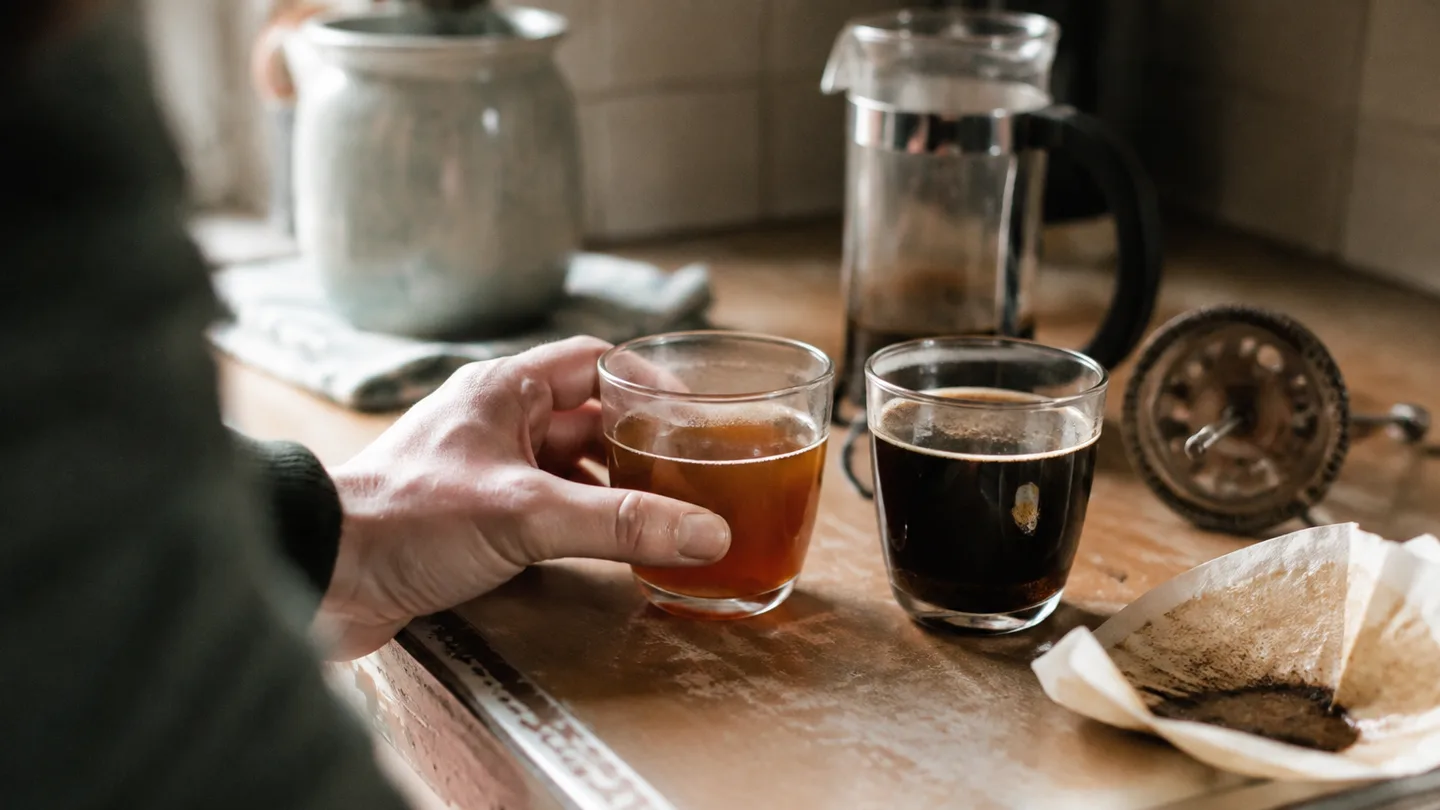
A controlled 30 g / 480 g brew you can repeat tonight
Use this as a baseline rather than a final recipe. It gives you a stable middle point, so the next change has a clear meaning.
- Measure 30 g of coffee and 480 g of water. That is a 1:16 ratio. Heat the water to 93–96°C for a medium or light roast. If you do not have temperature control, let freshly boiled water sit briefly, then keep the same approach from brew to brew.
- Grind coarse and reasonably even. Aim for a granular grind without a large amount of powdery dust. Do not chase the coarsest possible setting; an uneven grind can give you both under-extracted large pieces and over-extracted fines in the same press.
- Wet every ground in the first 20–30 seconds. Pour the water steadily, making sure no dry pocket remains. Give the slurry one gentle stir, just enough to break clumps. Repeated stirring adds movement without solving a problem once all grounds are wet.
- Steep until 4:00. Break the crust with the back of a spoon, then plunge slowly. A controlled plunge takes roughly 20–30 seconds and keeps the settled particles from being thrown back through the liquid.
- Decant the whole brew. Do not leave the coffee sitting on the grounds while you drink the first cup. The liquid continues contacting the coffee in the press, so the later cups can become drier or more bitter.
For a cleaner version, break the crust at 4:00 and wait another three to five minutes before pressing. Letting the sediment settle is often more useful than buying a finer filter, but it trades some speed for a slightly longer extraction.
Light-roast coffee works in a French press. Begin around 94–96°C at 1:15–1:16; if the cup tastes sour or hollow, try one small step finer or add 30–60 seconds. Avoid jumping to a powdery grind, because the extra fines can solve one extraction problem while creating a texture problem.
For a 1-litre press, use about 60–67 g of coffee with 1,000 g of water for the same 1:15–1:17 range. Dose against the water you actually pour, not the capacity printed on the press.
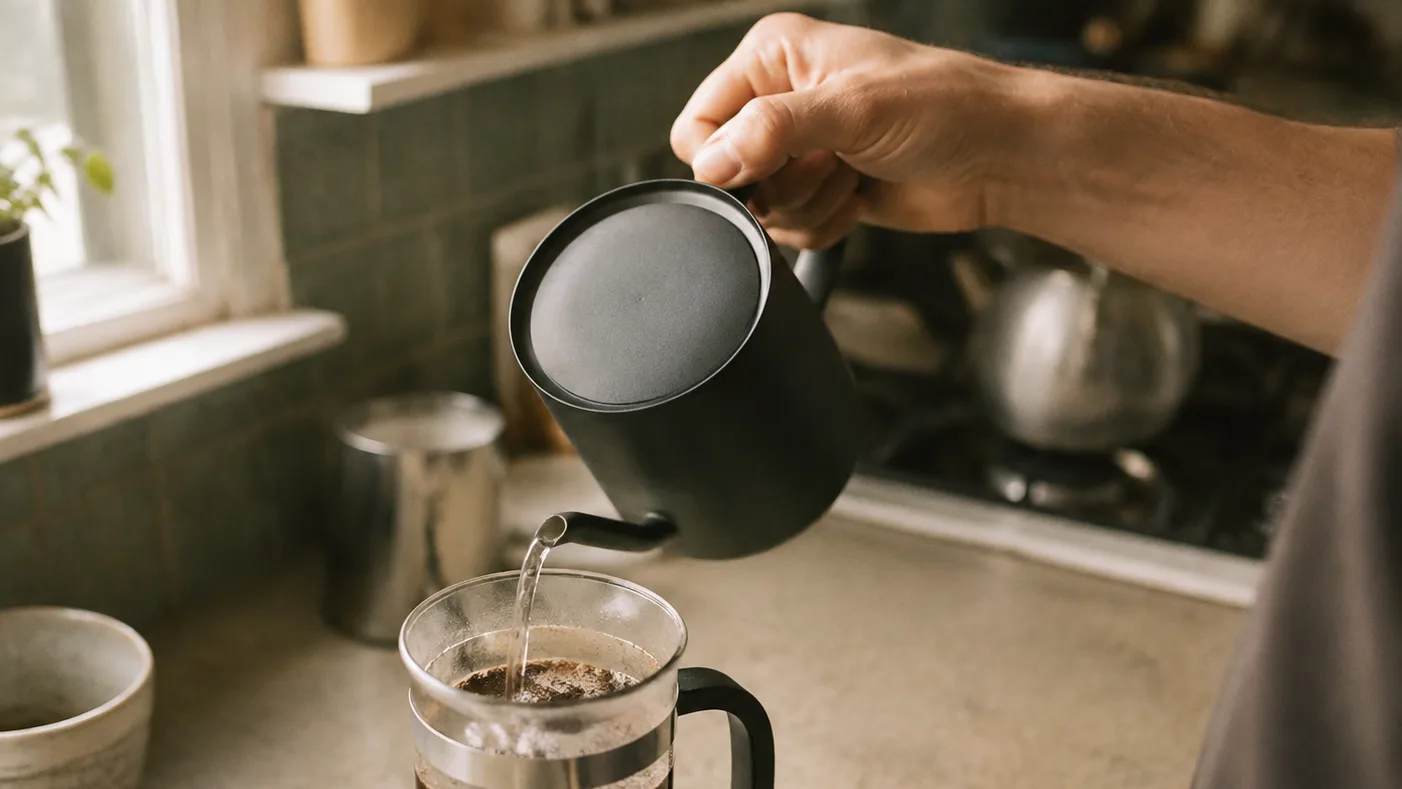
Move one dial: the smallest changes that fix the cup
Change one variable at a time. Otherwise, you may improve the flavor without learning which adjustment caused the improvement.
- Change the ratio for concentration. If the cup tastes balanced but too forceful, move from 1:16 toward 1:17. If it tastes clean but weak, move toward 1:15. This changes intensity more directly than changing steep time.
- Change time for extraction. If the cup is sour and hollow, add 30–60 seconds. If it is dry or bitter, shorten the brew by 30–60 seconds before making a large grind change.
- Change temperature in small steps. Move by about 2–3°C within the roughly 90–96°C working range. Hotter water is a sensible test for a light roast that tastes sharp and empty; cooler water is a sensible test for a dark roast that tastes harsh.
- Change grind size one small step. Go finer when the cup is under-extracted but not overly gritty. Go coarser when it is dry, harsh, or carrying too much sediment. A large jump makes it difficult to tell whether extraction or particle texture caused the change.
- Change agitation last. One gentle stir is a useful baseline. Repeated stirring or a fast plunge keeps more fines in motion, which can make the cup feel muddy even when the dissolved flavor is close to balanced.
The practical order is ratio for too much or too little intensity, then time or temperature for extraction, then grind and agitation for the finer diagnosis. That order keeps a texture problem from being mistaken for a strength problem.
Muddy, bitter, sour, or thin? Read the symptom before changing everything
Start by separating mouthfeel from flavor. Muddy usually points to particle movement. Bitter or dry usually points to too much extraction or a roast that is already presenting harsh flavors. Sour or hollow usually points to too little extraction, while thin can mean either a dilute ratio or a brew that never extracted enough.
| What you taste | Likely mechanism | First correction |
|---|---|---|
| Muddy or gritty | Grind is too fine, fines have migrated, or the plunge re-suspended settled particles. | Go one small step coarser and plunge more slowly. Keep the ratio and time unchanged. |
| Bitter or dry | Too much soluble material has been extracted, often through excessive time, heat, or a fine grind. | Shorten the brew by 30–60 seconds. If the cup remains harsh, reduce temperature by 2–3°C. |
| Sour or hollow | Under-extraction leaves desirable soluble material behind in the grounds. | Add 30–60 seconds or raise temperature by 2–3°C. For a light roast, test the hotter end first. |
| Thin or weak | The ratio is too dilute, or coarse grounds and short contact time have produced low extraction. | If the flavor is clean but faint, move from 1:17 to 1:16 or 1:15. If it is also sour, change time or temperature first. |
If the recurring question is why is my coffee bitter, do not begin by adding more coffee. First check whether the grounds are too fine, the steep is too long, or the water is too hot. A stronger ratio can make a bitter cup more concentrated without removing the cause of the bitterness.
French press vs pour-over: the winner depends on whether you value body or clarity
For full body, lingering aroma, and a cup that carries more oil and suspended material, French press wins. Its immersion method lets the grounds sit in the water, and its mesh filter leaves more of the brew's physical texture in the drink.
For cleaner separation between flavor notes, brighter perceived acidity, and less sediment, pour-over wins. Percolation, meaning water flowing through a bed of coffee, gives you a different contact pattern, while paper filtration removes more of the material that makes a French press feel coating.
The comparison is not settled by ratio alone. French press and pour-over can use the same 1:16 coffee-to-water ratio and still produce different cups because immersion versus percolation and mesh versus paper change both extraction behavior and what reaches your mouth. The pour over coffee vs french press comparison is most useful when you choose the texture you want first, then tune the recipe inside that method.
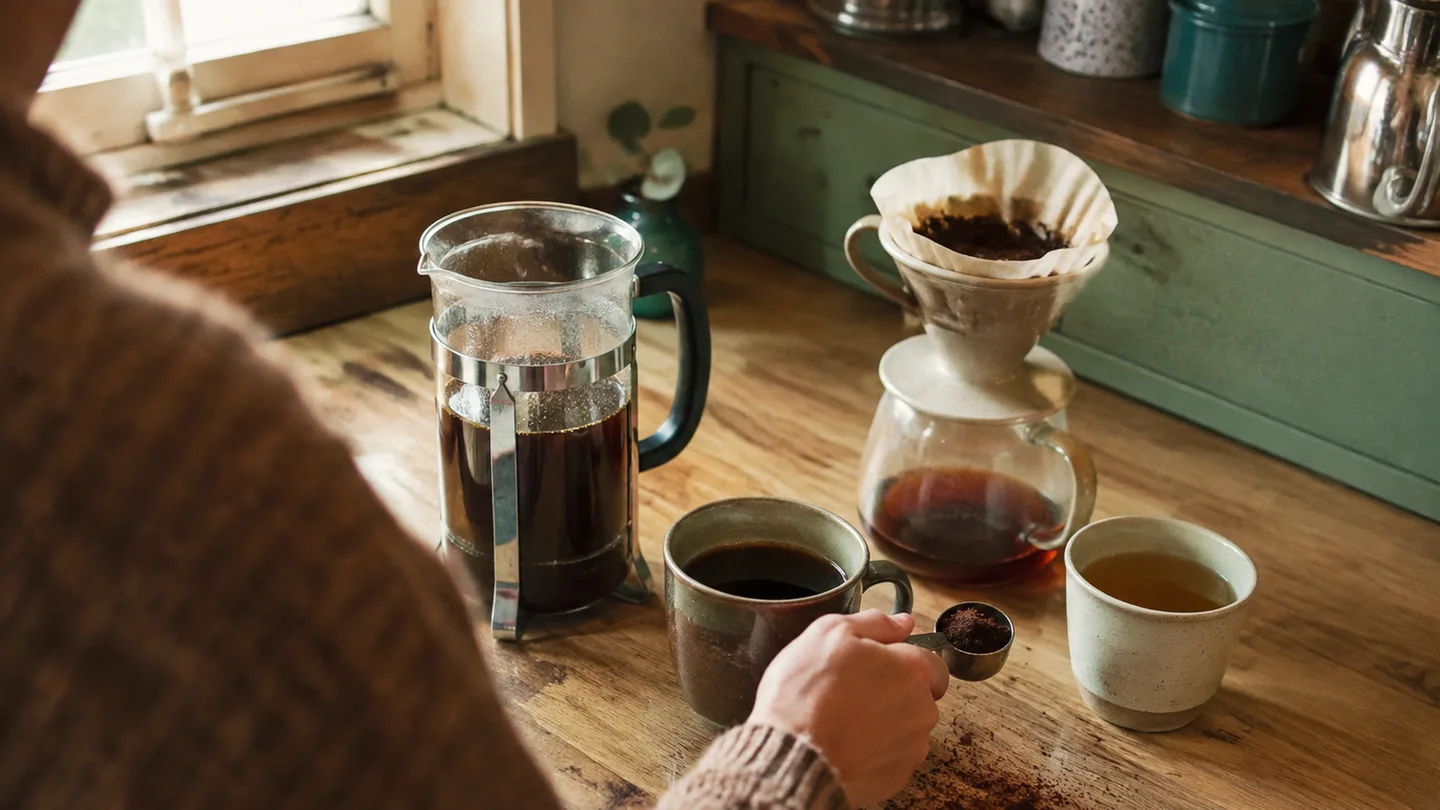
The trade-off that makes French press special: texture over cleanliness
The answer to what is special about French press coffee is not a hidden setting. It is the decision to keep more of the coffee's oils and fine suspended material in the cup, accepting a little sediment in exchange for weight and aroma.
Choose it when a four-minute immersion is more useful than a highly separated, sediment-free finish. With the optional settling pause, the workflow can run roughly four to nine minutes before decanting. Pressing slowly and pouring everything out matters because coffee left on the grounds continues extracting.
You can also make cold brew in a French press, but that is a separate long-immersion method: use a coarse grind, roughly 1:8–1:10 coffee to water for a concentrate, steep for about 12–16 hours, then press and dilute. For hot brewing, the clearest verdict is simple: French press is the better tool when texture is part of the flavor you are trying to keep.
Frequently Asked Questions
How much coffee should you use in a 1-litre French press?
Start with 60–67 g coffee for 1,000 g water, covering the 1:15–1:17 range, and dose against the actual water mass rather than the press's advertised capacity.
Can you use light-roast coffee in a French press?
Yes. Begin around 94–96°C at 1:15–1:16, then try one small step finer or 30–60 seconds longer if the cup tastes sour, while avoiding an overly fine grind that increases sediment.
Can you make cold brew in a French press?
Yes, but it becomes a separate long-immersion method: use a coarse grind, roughly 1:8–1:10 for a concentrate, steep for about 12–16 hours, then press and dilute.